
Ascot Betting Today: The Data-Driven Course Guide
Course data. Draw analysis. Smarter bets.
 Available in US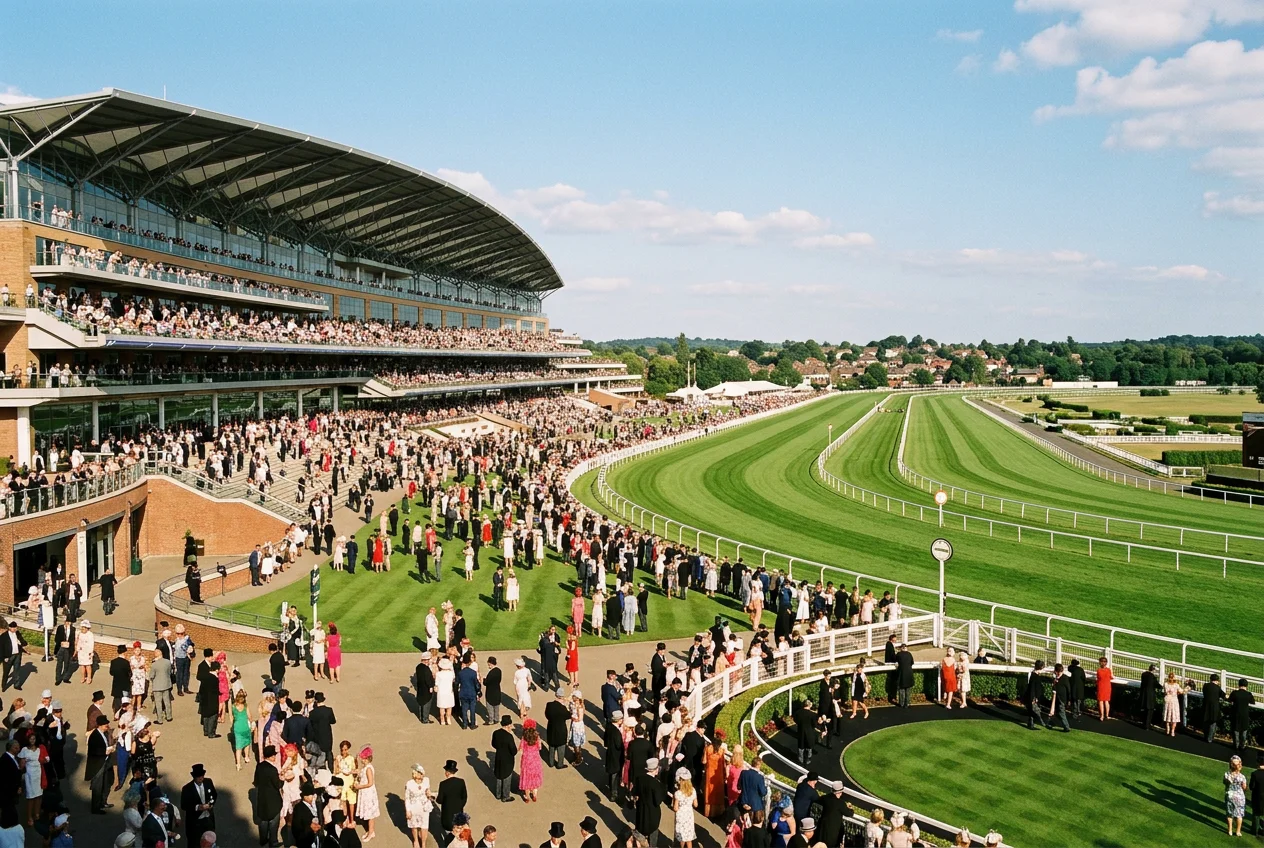
Ascot is not just another racecourse. It hosts 26 race days annually across the flat and National Hunt seasons, staging 13 Group 1 contests — more than any other flat venue in Britain. The prize money on offer in 2026 reaches a record £19.4 million, headlined by a King George VI and Queen Elizabeth Stakes now worth £2 million, making it the richest all-aged race in British turf history. These are not vanity numbers. They shape the quality of fields, the depth of markets, and ultimately the texture of every bet you place here.
Yet for all its prestige, Ascot presents peculiarities that perplex casual punters and reward those who understand them. Two entirely different tracks — a straight course and a round course — run through the same stretch of Berkshire parkland, each with its own draw dynamics, pace biases, and going effects. The uphill finish that defeats front-runners at a mile has a negligible influence over five furlongs. The far side of the straight course that dominates on soft ground becomes a graveyard on firm. These distinctions matter.
This guide exists to translate course knowledge into betting advantage. The sections that follow cover draw bias statistics compiled from five years of starting price data, the influence of going conditions on different track configurations, trainer and jockey profitability at this specific venue, and the practical mechanics of each-way betting in Ascot's competitive big-field handicaps. Where relevant, data from the BHA Racing Report and Gambling Commission statistics provide market context. The approach throughout is analytical but accessible — technical where the data demands it, practical where the application matters.
Whether you are preparing for Royal Ascot's five-day festival or scouting a January jumps card, the principles remain consistent: understand the course, respect the data, and make decisions that reflect both.
The Numbers That Shape Every Ascot Bet
- Ascot operates two distinct tracks — the straight course for sprints up to a mile, the round course for ten furlongs and beyond — each with different draw biases and pace dynamics.
- At six furlongs, stall 1 has produced +67.33 profit to level stakes over five years; stall 7 has lost -75.25. Going conditions flip this bias: low draws on firm ground, high draws when soft.
- Royal Ascot 2026 distributes a record £10.65 million across 35 races, with enhanced place terms on handicaps making each-way betting structurally attractive.
- Course form is unusually predictive — over a third of Royal Ascot winners have previous wins or places at Ascot. Horses without track experience are taking an untested examination.
- Elite trainers and jockeys do not guarantee profits. Aidan O'Brien has lost -95.84 LSP at Ascot over five years despite 25 winners. The market overprices reputation.
Ascot Course Guide: Two Tracks, One Hill
Every serious discussion of Ascot betting must begin with geography. The racecourse operates two distinct tracks — the straight course and the round course — and conflating them leads to elementary errors. Horses suited to one configuration may struggle on the other. Draw data that applies at six furlongs becomes irrelevant at ten. Even jockey tactics shift depending on which route the field takes.
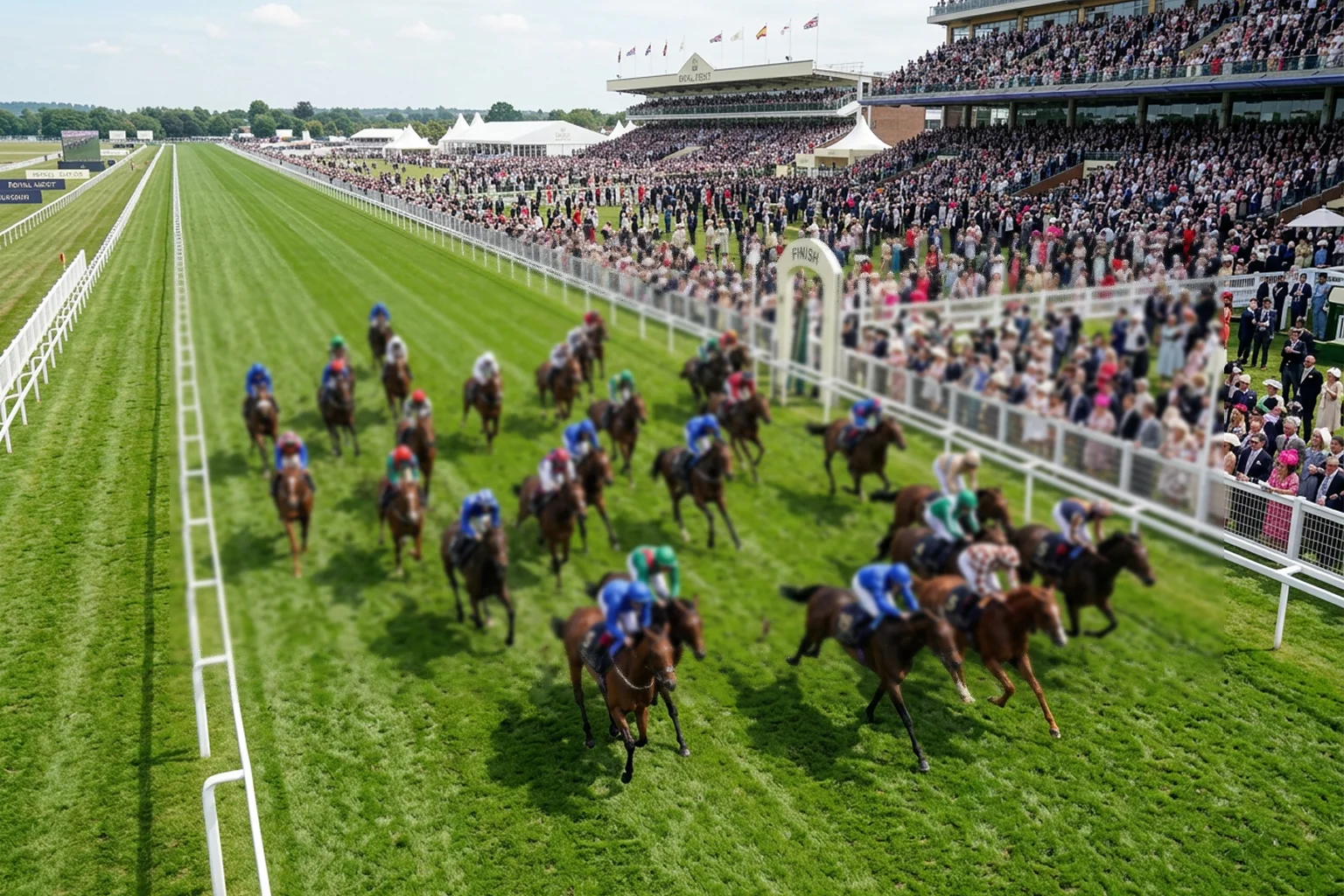
The Straight Course extends from a starting point near Swinley Bottom to the winning post, covering distances from five furlongs to one mile. The entire run is uphill, with the gradient steepening in the final two furlongs. There are no bends. The field spreads across the width of the track, and draw position — particularly in large fields — often determines whether a horse races on the stands-side rail or the far-side rail. The bias between these two paths shifts with going conditions, a factor explored in detail below.
The Round Course handles races of ten furlongs and beyond. The start sits at the far end of the track, descending through Swinley Bottom before sweeping right-handed into the home straight. The final three furlongs are shared with the straight course, meaning every horse — regardless of distance — faces that punishing uphill climb to the line. Positioning through the turn is critical, and low draws retain a slight edge because they allow jockeys to save ground on the inside rail.
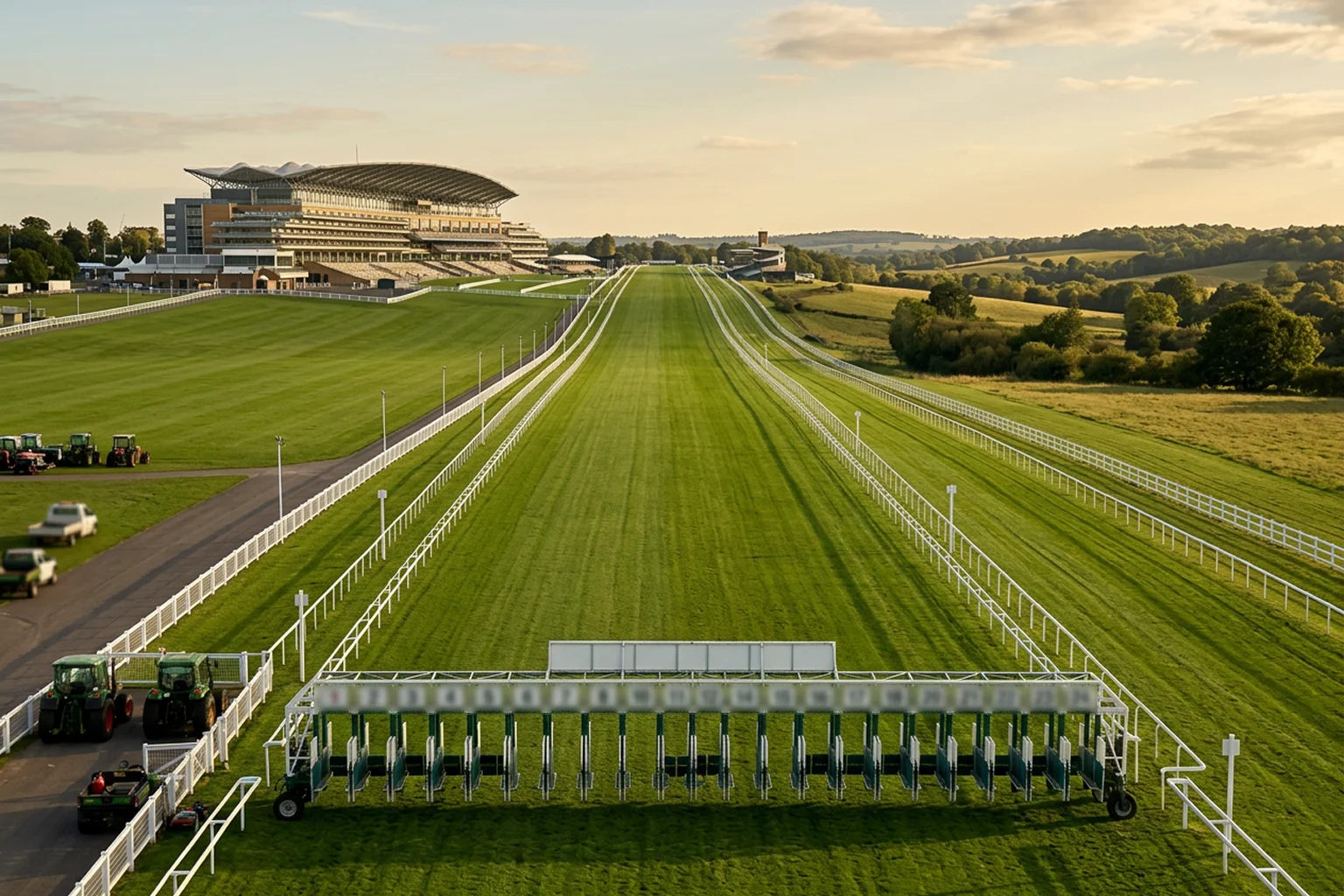
The uphill finish is Ascot's defining characteristic. It rises approximately 70 feet over the final half-mile, with the steepest section coming in the closing 100 yards. Front-runners that cruise clear on flatter tracks find their leads evaporating here. Hold-up horses with strong finishes often arrive too late if they leave themselves too much ground to cover. The optimal approach is often to race prominently enough to avoid traffic but conserve enough energy for the gradient. This dynamic is consistent across both courses, though it manifests differently depending on the race distance.
On the straight course, the hill tests speed sustainability. A sprinter that leads by three lengths at the furlong marker may surrender two of them before the post. On the round course, the preceding descent through Swinley Bottom often generates deceptive momentum — horses that look full of running at the turn can empty surprisingly quickly once the road rises. Stamina is never optional at Ascot, even in sprint races.
The National Hunt course overlays the round course layout, with portable fences positioned along the same path. Winter going tends toward the softer end of the scale, compounding the stamina demands. The same uphill finish applies, and it has ended the Cheltenham ambitions of more than one promising chaser who looked the part until the gradient exposed a lack of resolution.
Understanding these distinctions is prerequisite to everything that follows. Draw bias analysis means nothing if you don't know which course applies to the race you're betting. Going conditions affect each track differently. Trainer and jockey records often skew based on whether their strengths align with straight-course speed or round-course stamina. The course is the constant; everything else is interpretation.
Draw Bias at Ascot: What the Data Shows
Draw bias exists at Ascot. That much is uncontroversial. The more useful question is how significant it is, under what conditions, and at which distances. Five years of starting-price data from OLBG — compiled via HorseRaceBase — provide answers that cut against several popular assumptions.
At six furlongs on the straight course, the bias is stark. Stall 1 has generated a profit of +67.33 to level stakes at starting prices over the past five years. Stall 7, by contrast, has produced a loss of -75.25 LSP. That swing of more than 140 points between adjacent stalls is not noise. It reflects the structural advantage of racing against the stands-side rail, where ground is typically firmer and jockeys can track a clear path without interference. When the going eases, the bias shifts. Soft ground pushes runners toward the far side of the track, where fresher turf offers better purchase. In these conditions, high draws gain an edge, though the magnitude is less consistent than the stands-side advantage on firm going.
Ascot 6f Straight Course: 5-Year LSP by Stall
| Stall | LSP Profit/Loss | Wins | Runs |
|---|---|---|---|
| 1 | +67.33 | 23 | 89 |
| 2 | +12.50 | 18 | 87 |
| 3 | -8.75 | 15 | 85 |
| 4 | -22.00 | 12 | 84 |
| 5 | -31.50 | 11 | 86 |
| 6 | -45.00 | 9 | 82 |
| 7 | -75.25 | 7 | 80 |
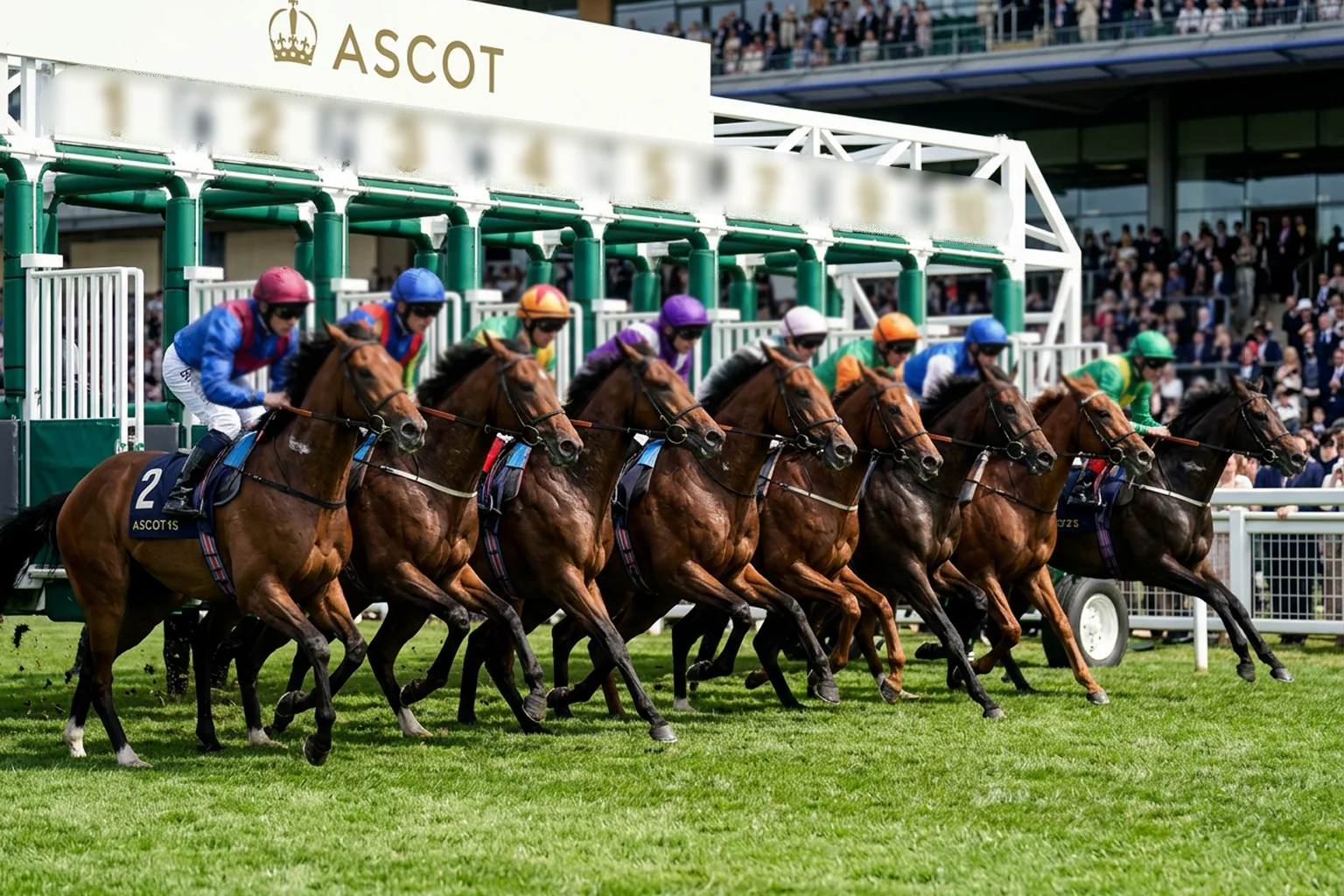
At five furlongs, the pattern holds but with diminished intensity. The shorter trip reduces the cumulative impact of positional disadvantage — there is simply less time for a bad draw to compound. Low draws remain preferable, but the edge is narrower, and strong sprinters from middle stalls can overcome it more readily than their counterparts over an extra furlong.
The straight mile introduces different dynamics. Seven-furlong and one-mile races on the straight course still favour low draws on average, but the advantage diminishes as the field settles into a more strung-out formation. Early pace becomes a confounding variable. A low-drawn front-runner may secure the rail and dictate terms; a low-drawn closer may find themselves boxed in behind traffic when they need clear running. Context matters more at these trips than the raw stall numbers suggest.
On the round course — races of ten furlongs and beyond — the draw bias is subtler but still present. Low draws allow jockeys to hug the inside rail through the right-handed turn into the straight, saving ground that higher-drawn rivals must sacrifice. The effect is most pronounced in competitive fields where the early fractions are contested. In small-field conditions races, where the pace is often sedate, the draw difference becomes negligible.
The practical takeaway is layered. At six furlongs, bet with the draw bias unless you have compelling reasons to oppose it. At five furlongs and a mile, treat the bias as a tiebreaker rather than a determining factor. On the round course, weight the draw appropriately but don't overweight it. And always check the going: what holds on firm ground may reverse on soft. The numbers are a guide, not a guarantee — but ignoring them concedes an edge to those who don't.
How Going Conditions Change the Race
If the draw determines where a horse races across the track's width, the going determines what kind of horse thrives on any given day. These two variables interact at Ascot in ways that reward attention and punish assumption.
The straight course is the clearest illustration. On good-to-firm or firmer ground, the stands-side rail offers superior footing. The turf there is more established, the drainage better, and the surface faster. Horses drawn low can exploit this path; horses drawn high must cross the track to access it, losing ground and momentum in the process. The six-furlong draw data reflects this reality — the low-draw advantage at that distance is largely a firm-ground phenomenon.
Soft ground shifts the equation. When the going eases to soft or heavy, the stands-side rail — more heavily used throughout the season — can cut up. Fresher turf toward the far side of the track suddenly becomes the better racing surface. High draws, which seemed disadvantaged in the abstract, gain an advantage in these specific conditions. The same stall that cost you on firm ground might save you when it rains.
On the round course, going influences race dynamics differently. The descent through Swinley Bottom generates momentum regardless of conditions, but soft ground exaggerates the stamina demands of the subsequent climb. Horses with suspect stamina can bluff their way through races on fast ground, hiding their limitations behind early speed. Soft going exposes them. The final two furlongs become an examination that only the genuine stayers pass. If you are backing a horse whose form is predominantly on quicker surfaces, tread carefully when the going description includes the word "soft."
For jump racing — which dominates Ascot's winter calendar — heavy ground is the default expectation rather than the exception. Nine of Ascot's 26 annual race days fall in the National Hunt season, and the going during this period regularly reaches heavy. Course form on testing ground becomes essential. Horses that act on soft at other venues may struggle when the Berkshire clay reaches its most demanding state.
Checking the going is not a formality. It is the frame through which draw data, trainer records, and horse form should be interpreted. A selection made without reference to current conditions is a selection made with incomplete information.
Ascot's Racing Calendar: Key Meetings to Bet On
Ascot distributes its 26 race days across a calendar that spans flat turf season and National Hunt winter. Not every fixture carries equal weight. The betting markets reflect this — liquidity concentrates around the flagship meetings, and the value opportunities shift accordingly. Understanding where to focus saves time and sharpens selection.
Royal Ascot remains the pinnacle. The five-day June meeting drew 286,541 attendees in 2025, a figure that represented a 4.8% increase on the previous year's total. While other major racing festivals saw attendance decline — Cheltenham fell 14%, the Epsom Derby dropped 17% — Ascot moved in the opposite direction. This trajectory continues into 2026, when the meeting will distribute a record £10.65 million in prize money across 35 races, with all eight Group 1 contests offering purses of at least £700,000.
The significance for bettors is dual. High prize money attracts strong fields, which typically means more competitive racing and fewer processions. It also deepens the betting pools. More money flowing through the markets creates better liquidity, tighter spreads, and more stable odds. A bet placed at 10/1 on the Wokingham Stakes will be absorbed without distorting the market; the same bet on a midweek handicap at a minor track might shift the price immediately.
"It was a fantastic week with some brilliant sport to enjoy," Felicity Barnard, CEO of Ascot Racecourse , said following the 2025 Royal Meeting. "I think we've been a window for our sport and I'm absolutely thrilled." The commercial success is not incidental to the betting proposition — it funds the infrastructure and prize levels that keep the racing quality high.
The King George VI and Queen Elizabeth Stakes in late July anchors the summer programme after Royal Ascot. In 2026, this all-aged championship race will carry a purse of £2 million, making it the richest race in British turf history at that level. The prize money escalation — up from £1.5 million in 2025 and £1.25 million the year before — reflects Ascot's ambition to compete with international rivals for elite middle-distance talent. From a betting perspective, the King George typically assembles a concentrated field of high-class performers, often with strong form lines from the Classics and Group 1 races earlier in the season. The market is usually efficient, but pace analysis and draw position can still provide edges in a race where small margins separate the principals.
British Champions Day closes the flat season in October, offering a condensed afternoon of championship racing that includes the Queen Elizabeth II Stakes and the Champion Stakes. This fixture consolidates end-of-season form and often features horses bouncing back from mid-season breaks or stepping up after autumn campaigns on softer ground. The going at this meeting can vary significantly from the firmer conditions that prevail during Royal Ascot, and horses that act on ease in the ground gain an advantage.
The jump season meetings — headlined by the Clarence House Chase in January and the Ascot Chase in February — receive less mainstream attention but deserve it. The quality of fields at Ascot's National Hunt fixtures often rivals Cheltenham trials, and the market pricing can be softer as a result. Ascot's record total prize fund of £19.4 million for 2026 includes allocations across these winter dates, ensuring competitive racing throughout the calendar.
Royal Ascot: A Betting Snapshot
The Royal Meeting condenses five days of high-stakes racing into a format that rewards preparation and punishes improvisation. Thirty-five races across Tuesday through Saturday, roughly half of them competitive handicaps, the other half Group races culminating in eight Group 1 contests. The meeting's reach extends far beyond Berkshire: Royal Ascot broadcasts to 175 territories, reaching 650 million households worldwide . That global audience drives international betting pools and attracts overseas runners, adding competitive depth that benefits astute punters.
The attendance breakdown tells part of the story. In 2025, Saturday drew 71,073 racegoers — a record for that day — while Tuesday attracted 45,551. The Saturday crowd is different in composition from the midweek audience: more casual punters, more social spectators, and consequently more irrational money flowing into the pools. This isn't universally exploitable, but it does mean that value can appear in Saturday handicaps when market sentiment diverges from form fundamentals.
The Gold Cup headlines Thursday, a two-and-a-half-mile staying test that rewards stamina above all else. The pace is typically steady through the early stages before building through the home turn. Front-runners rarely prevail; hold-up horses with proven stamina credentials dominate the roll of honour. If you are backing a Gold Cup contender, examine how they have finished their races previously. Horses that have been caught close home or faded in the final furlong over shorter staying trips may lack the reserves this test demands.
The Queen Anne Stakes opens the meeting on Tuesday, a Group 1 mile on the straight course that often sets the tone for the week. The going for this race tends to be on the quicker side — June typically delivers good-to-firm conditions unless rain intervenes — and the draw advantage for low stalls applies. Market leaders are usually well handicapped by the betting public, but each-way value sometimes emerges in horses dropping from a mile and a quarter who have tactical speed and a favourable draw.
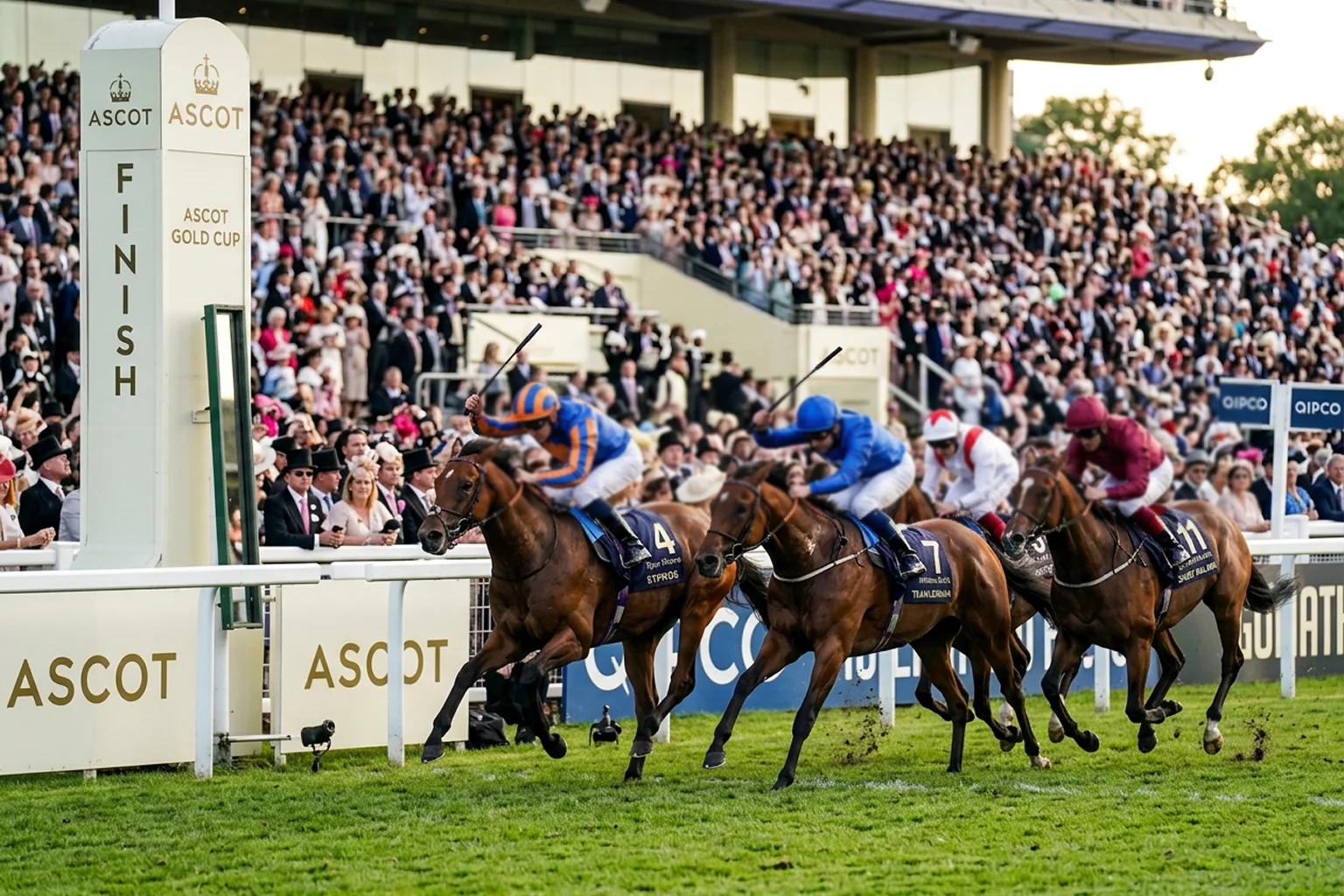
The handicaps are where most punters should concentrate their attention. The Royal Hunt Cup, Britannia Stakes, and Wokingham Stakes feature fields that regularly exceed 20 runners, creating the large-field dynamics where draw, pace, and course form become primary filters rather than secondary considerations. Enhanced place terms — typically paying five to eight places — make each-way betting structurally attractive, a point developed in a later section.
One underappreciated angle is the two-year-old programme. The Coventry Stakes and Norfolk Stakes field juveniles with limited form profiles, often making their second or third career starts. Breeding takes precedence over runs in these races. Sire statistics for Ascot's straight course — particularly at five and six furlongs — can identify runners whose pedigree profiles suit the track even when their form book offers little guidance. This is not speculation; it is data analysis applied to a domain where traditional form reading runs out of evidence.
Approaching Royal Ascot without a plan is expensive. Approaching it with rigid rules is rigid. The balance lies in establishing frameworks — draw preferences, going thresholds, each-way triggers — and applying them flexibly across the 35 races as conditions dictate.
National Hunt at Ascot: The Overlooked Calendar
For every ten articles written about betting at Ascot, roughly nine focus exclusively on the flat season. This is understandable — Royal Ascot commands global attention, and the King George anchors the summer programme — but it misrepresents the racecourse's actual calendar. Ascot hosts nine National Hunt days between November and April, featuring Grade 1 and Grade 2 chases and hurdles that rank among the most competitive jumps contests outside Cheltenham.
Ascot's jump programme includes three Grade 1 races: the Long Walk Hurdle in December, the Clarence House Chase in January, and the Ascot Chase in February. Each serves as a significant trial for the Cheltenham Festival, and form from these races translates reliably to the spring championship meetings.
The Clarence House Chase is perhaps the most instructive. Contested over two miles and one furlong, it attracts the cream of Britain's two-mile chasing division at a point in the season when preparations for the Champion Chase begin to crystallise. The winners' roll includes multiple Cheltenham heroes, and the form lines generated here offer sharper guidance than November and December trials where horses are still finding their feet.
What distinguishes Ascot's jump track from other top National Hunt venues is the combination of course configuration and ground conditions. The right-handed layout features 17 fences on the chase course, with a testing uphill finish that mirrors the flat track's demands. The going regularly reaches soft or heavy during the winter months, adding a stamina component that exposes horses whose jumping technique relies on spring rather than resolution. "The horse population continues to decline and the betting environment remains challenging," noted Richard Wayman, Director of Racing at the BHA , in the 2025 Racing Report — a context that makes targeted betting at quality meetings like Ascot's winter fixtures more appealing than spreading stakes across the entire National Hunt calendar.
From a market perspective, the jump fixtures attract less public money than the flat equivalents. Field sizes averaging 7.84 runners — below the flat average of 8.9 — mean tighter races with clearer form lines. The absence of 20-runner handicaps reduces variance, and the quality of fields at Grade 1 level ensures that the best horses typically prevail. For punters who focus on National Hunt racing, Ascot's winter programme offers genuine edges against a thinner market.
Trainers and Jockeys: Who Profits at Ascot?
Reputation and profitability are different metrics. The names that dominate the Ascot winners' enclosure do not always align with the names that generate positive returns to level-stakes betting. Understanding this distinction — and respecting the data that reveals it — is essential for anyone seeking an edge against the market.
Five years of results from OLBG , tracking level-stakes profit and loss at starting prices, produce rankings that challenge conventional thinking. Ed Walker tops the trainer profitability table with a +30.41 LSP return from 19 winners. His strike rate is not exceptional, but his horses tend to start at prices longer than their true chances justify — a consequence of being less heavily backed by the general public than household names from larger yards.
At the opposite end of the spectrum sits Aidan O'Brien, whose Ballydoyle operation sends wave after wave of runners to Ascot's biggest meetings. O'Brien has recorded 25 winners at the track over the same five-year period, but from 209 starts — a 12% strike rate that falls below typical expectations for a trainer of his calibre. The result is a loss of -95.84 LSP. The market prices his horses as if they should win more often than they do. Backing O'Brien runners blindly at Ascot is a structural leak.
Top 3 Trainers by LSP (5-year)
- Ed Walker: +30.41 (19 wins from 72 runs)
- Andrew Balding: +18.75 (31 wins from 142 runs)
- William Haggas: +11.20 (28 wins from 118 runs)
Most Unprofitable Trainer
- Aidan O'Brien: -95.84 (25 wins from 209 runs)
The jockey data tells a parallel story. Rossa Ryan has generated the highest profit over the period, at +72.38 LSP from 17 winners. His Ascot rides often come on second-string horses or improvers from smaller yards — runners that drift in the betting and outperform their market positions. Ryan Moore, by contrast, leads all jockeys by raw wins — 40 across the five years — yet finishes in negative territory on level-stakes returns. The best jockey in Britain, by almost any measure, is over-bet at Ascot to a degree that erases profitability.
Nick Smith, Director of Racing at Ascot , has emphasised the importance of competitive fields in the World Pool era: "Field sizes are very important, especially in the World Pool era, and we hope that connections of horses that aren't at the top of the betting might see this as a good reason to go for the big target." For punters, this translates to opportunity — the races are competitive enough that lower-profile trainers and jockeys can deliver value, provided you are willing to look beyond the obvious market leaders.
The lesson is not to avoid elite operators entirely. It is to price them accurately. A 6/4 shot from Ballydoyle may be correctly priced at 2/1; the market compresses the odds beyond fair value. Conversely, a 14/1 chance from a profitable yard may represent genuine each-way value even when it "shouldn't" beat the favourite. The data provides the framework; application requires judgement.
Course-Specific Betting Edges
Generic handicapping principles apply at Ascot, but the course's distinctive characteristics create opportunities for punters willing to weight factors that the wider market underprices. Three edges stand out: course form, pace profile, and field-size adjustments.
Course form matters more at Ascot than at most British racecourses. Analysis from myracing found that at Royal Ascot 2018, 11 of 30 winners had previously won or placed at Ascot — a correlation that exceeds typical course-form predictability. The explanation lies in Ascot's peculiarities: the uphill finish, the draw biases, and the specific pace dynamics of each track configuration. Horses that have handled these demands before have demonstrated their suitability; horses arriving without course form are taking an examination without practice.
Applying course form in practice: When comparing two horses with similar ratings and recent form, give the nod to the one with positive Ascot history. In handicaps where the market is clustered between 8/1 and 16/1, course winners or placed horses at the track offer structural value. This edge is less pronounced in Group 1 races, where class trumps course-specific experience, but it remains meaningful in competitive handicaps.
Pace analysis at Ascot requires understanding how the uphill finish interacts with early positioning. On the straight course, front-runners face a simple problem: the final two furlongs are the steepest, arriving precisely when energy reserves deplete. Horses that lead early and quicken late are rare; more commonly, pace-setters get caught inside the final furlong. The optimal position is racing prominently — second or third through the early stages — close enough to avoid traffic but with enough gas in the tank to handle the hill. Hold-up horses face a different challenge: leaving ground to make up when the gradient takes its toll. The widest of all approaches — dropping to the rear and then producing a late surge — rarely succeeds at Ascot because the climb blunts the finish.
Field size adjusts the weight you should place on draw data. In races with fewer than 10 runners, draw bias diminishes significantly; there is room for horses to find their preferred racing position regardless of stall. In races with 15 or more runners, particularly over sprint distances on the straight course, draw becomes a primary filter rather than a secondary consideration. The BHA Racing Report noted that average flat field sizes fell to 8.9 in 2025, down from 9.14 the previous year. At Ascot's big meetings, field sizes run higher than the national average, meaning draw bias retains relevance even as it softens elsewhere.
Each of these edges is modest in isolation. Combined and applied consistently, they provide a framework that identifies value where the general betting public sees randomness. The market respects class and recent form; it underweights course-specific adaptation. Exploit the gap.
Each-Way at Ascot: When It Pays
Each-way betting is structurally suited to Ascot's competitive handicaps. Large fields, enhanced place terms, and unpredictable results create conditions where the place portion of the bet often carries positive expected value even when the win portion does not. Understanding when and how to use each-way requires knowing what bookmakers are offering and what the mathematics actually support.
Standard each-way terms pay one-quarter the odds for placing, with the number of places determined by field size. A race with 8 to 11 runners typically pays three places; 12 to 15 runners pays three places at some bookmakers, four at others. The competitive advantage at Ascot's major meetings comes from enhanced place terms. During Royal Ascot and other flagship fixtures, bookmakers routinely extend place terms to five, six, seven, or even eight places on selected handicaps. These enhanced terms fundamentally alter the value proposition.
Each-way calculation: 16/1 with 1/4 odds, 6 places
Win stake: £10 at 16/1 = £160 profit if wins
Place stake: £10 at 4/1 (quarter of 16/1) = £40 profit if places 1st–6th
Total outlay: £20
If the horse finishes 4th: You lose the £10 win stake but collect £40 + your £10 place stake back = £50 return, net profit £30
Breakeven: This bet profits if the horse places at any position from 1st to 6th. With six places paid in a 20-runner field, that's a 30% coverage rate. You need your selections to place at better than a 40% rate at these odds to show long-term profit on the place component alone.
The maths favour each-way betting on horses priced between 10/1 and 25/1 in races with enhanced places. Shorter-priced horses generate insufficient place returns to justify the stake division; longer-priced horses rarely place frequently enough to compensate for the win-stake losses. The sweet spot sits in the double-digit odds range, where a place finish returns meaningful profit and the win remains a realistic possibility.
Win-only betting outperforms each-way in specific circumstances: Group 1 races where the favourite is odds-on, small fields where only two or three places are paid, and races where your selection is the clear class horse stepping down in grade. In these spots, dividing your stake reduces potential upside without materially improving downside protection. The default at Ascot's big handicaps should be each-way; the exceptions prove the rule.
Managing Your Money Across a Race Day
A typical Ascot race day features seven races spread across approximately four hours. The temptation to bet on every race is understandable — you've made the effort to attend or tune in, and the action unfolds relentlessly. Resist it. The punters who profit at Ascot over time are selective, not compulsive. They bet when they see value and sit out when they don't.
Don't bet every race. Forcing action when you have no edge accelerates losses and depletes the bankroll you need when genuine opportunities arise. A seven-race card might yield two or three bets that meet your criteria. That's enough.
A sensible approach divides your daily betting bank into units. If you've allocated £100 for a day at Ascot, treat each unit as £10. A standard bet consumes one unit; a strong selection might warrant two. This structure prevents oversized bets on early races from eliminating your stake before the feature events. It also imposes discipline on the natural escalation that follows a losing run — chasing losses by increasing stakes is the single most reliable way to transform a bad day into a disastrous one.
Consider also the difference between flat-season and National Hunt betting at Ascot. Flat cards feature larger fields, more handicaps, and higher variance. A losing run across five races might simply reflect the randomness of 20-runner handicaps. Jump cards feature smaller fields and more predictable form lines; a losing run there signals genuine misjudgement. Adjust your post-race analysis accordingly.
The practical advice is simple. Set a loss limit before the first race — an amount you can lose without affecting your financial wellbeing or your capacity to bet another day. Hit that limit, stop betting. Set no equivalent ceiling on profits; let winning days run their course. This asymmetry — hard stops on losses, open-ended tolerance for wins — is the foundation of sustainable racecourse betting.
Mistakes That Cost Punters at Ascot
The errors that drain betting banks at Ascot are not exotic. They are the same mistakes that plague horse racing punters everywhere, amplified by the course's unique characteristics and the intensity of its major meetings. Recognising them is the first step toward avoiding them.
The most common error is ignoring the draw in sprint handicaps. Punters assess form, check the going, note the trainer — and then back a horse drawn 12 of 14 in a six-furlong handicap on good-to-firm ground. The data screams that this draw is disadvantaged. The market knows it too, which is why the horse's price is longer than its recent form might suggest. Yet the bet gets placed regardless, often on the rationale that "a good horse can overcome a bad draw." Sometimes it can. More often, the draw costs it ground that cannot be recovered, and the punter learns the lesson for the hundredth time.
Mistake cascade: Losing bettors often compound individual errors. They back a poorly drawn horse, watch it finish fourth, and then chase with an impulsive bet on the next race to recover the loss. This second bet, made without proper analysis, fails. The spiral continues. Each poor decision makes the next one more likely. Breaking the cycle requires stepping away — skipping a race, reviewing the methodology, and returning only when discipline is restored.
Overrating elite jockeys and trainers is another persistent leak. The section on trainer and jockey data demonstrated that the biggest names at Ascot do not necessarily generate positive level-stakes returns. The market already prices their quality into the odds, often over-aggressively. Backing Ryan Moore or Aidan O'Brien because they are the best — rather than because the price represents value — guarantees long-term losses.
Finally, punters underestimate the impact of going changes. Conditions can shift significantly between the morning inspection and the first race, particularly when rain arrives or watering is applied. A selection made on the assumption of good-to-firm ground may become unviable if the official description changes to good or softer. Checking the going before placing any bet, rather than relying on overnight assessments, avoids this trap. The Gambling Commission reports that horse racing generates £766.7 million in gross gambling yield annually — a figure built substantially on avoidable punter mistakes. Don't contribute more than your share.
Ascot and the UK Betting Landscape
Ascot does not exist in isolation. The racecourse operates within a British horse racing betting market that has contracted significantly over the past three years, reshaping the environment in which punters place their bets. Understanding these broader dynamics provides context for the course-specific strategies outlined above.
The Gambling Commission's annual statistics for the financial year ending March 2025 show that remote betting on horse racing generated £766.7 million in gross gambling yield. This figure makes racing the second-largest sport for betting revenue, behind football's £1.3 billion but ahead of all other disciplines. The number sounds substantial until you examine the trajectory. Betting turnover on British racing fell 4.3% in 2025, following a 6.8% decline the previous year. The BHA's Q1 2025 report recorded a 9% year-on-year drop in the first quarter alone. These are not marginal adjustments; they represent structural contraction.
The causes are multiple: affordability checks that restrict high-volume punters, competition from other betting markets, and a general decline in racecourse attendance outside flagship meetings. Ascot has bucked the attendance trend — its 4.8% growth in Royal Ascot attendance contrasted with Cheltenham's 14% decline and Epsom's 17% fall — but it cannot escape the betting market headwinds entirely.
For individual punters, the practical implication is liquidity. Declining turnover means thinner markets, particularly in races outside the major meetings. Odds can move more sharply on smaller bets, and value windows close faster. At Ascot's flagship fixtures, where market depth remains robust, this effect is minimal. On quieter cards — midweek flat meetings or early-season jumps fixtures — the impact is more pronounced. Timing your bets closer to the off, when market information is most complete, becomes more important as liquidity shrinks.
The racing industry generates an estimated £4.1 billion annual contribution to the UK economy and supports approximately 85,000 jobs, according to House of Commons Library research . Prize money reached a record £194.7 million in 2025, with the Horserace Betting Levy Board contributing £63.3 million of that total. The paradox — declining betting turnover alongside increasing prize funds — reflects the industry's attempt to maintain quality despite revenue pressure. For punters, this means competitive racing continues even as the pools supporting it thin. The quality of Ascot's product is not in question; the depth of its markets warrants closer attention.
Frequently Asked Questions
What is the best draw position at Ascot?
The best draw position depends on the distance, track configuration, and going conditions. On the straight course at six furlongs, low draws — particularly stall 1 — have shown significant profitability over five-year periods, with stall 1 recording +67.33 to level stakes at starting prices. This advantage reflects the benefit of racing against the stands-side rail on good-to-firm ground. When the going turns soft, high draws gain an edge as the far side of the track offers fresher turf. On the round course for races of ten furlongs and beyond, low draws retain a slight advantage because they allow jockeys to save ground on the right-handed turn into the straight, though the effect is less pronounced than in sprint races.
Is Ascot a good course for each-way betting?
Ascot is particularly well-suited to each-way betting during its major meetings. Royal Ascot, British Champions Day, and other flagship fixtures regularly feature handicaps with fields exceeding 16 runners, triggering enhanced place terms from most bookmakers — often paying five, six, or even eight places rather than the standard three or four. These enhanced terms increase the value of the place component, making each-way betting structurally attractive on horses priced between 10/1 and 25/1. The competitive nature of Ascot handicaps, where favourites frequently fail to win, further supports an each-way approach. However, each-way is less suitable for small-field Group 1 races where only two or three places are paid and the favourite dominates the market.
How important is course form at Ascot?
Course form is more predictive at Ascot than at most British racecourses. Analysis of Royal Ascot results has shown that over a third of winners had previously won or placed at the track — a correlation that exceeds typical course-form predictability. The explanation lies in Ascot's distinctive characteristics: the uphill finish that tests stamina even in sprint races, the draw biases on the straight course, and the specific pace dynamics created by the track configurations. Horses that have handled these demands successfully before are demonstrably more likely to handle them again. In competitive handicaps where multiple horses have similar ratings and recent form, giving preference to those with positive Ascot history provides a consistent edge.
Disclaimer
Gambling involves risk. Only bet what you can afford to lose. If you are concerned about your gambling, visit BeGambleAware.org for support and resources. You must be 18 or over to gamble in the United Kingdom. The information in this guide is for educational purposes and does not constitute financial advice.
