
Ascot Course Guide: Track Layout, Going and What It Means for Betting
 Available in US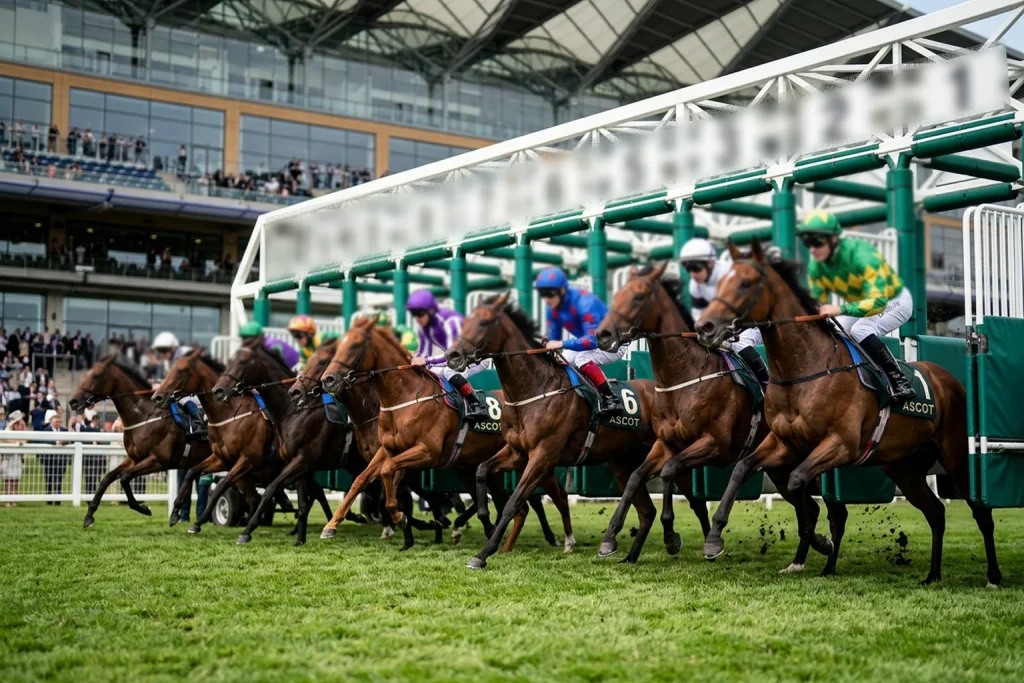
Understanding Ascot’s course layout is not optional for serious punters. The track’s configuration—two distinct flat courses plus a demanding National Hunt circuit—shapes outcomes in ways that form figures alone cannot capture. A horse who excels at Newmarket’s flat, galloping straights may struggle with Ascot’s gradients. A proven stayer at Cheltenham might find Ascot’s uphill finish less forgiving than expected. Every year, punters lose money backing horses whose ability is real but whose suitability to this particular track is questionable.
Ascot hosts 26 race days annually: 16 flat meetings from May to October, 9 National Hunt fixtures from November to April, and British Champions Day in mid-October. That schedule makes it one of Britain’s busiest courses across both codes. The track accommodates 13 Group 1 flat races each year—more than any other British venue—plus Grade 1 jumps contests including the Clarence House Chase and the Long Walk Hurdle. The variety of racing demands a nuanced understanding of what the course asks from horses at different distances and in different conditions.
This guide walks through each section of the track: the straight course that hosts sprints and mile races, the round course used for middle-distance and staying events, and the jump course with its 17 fences. For each, the focus is on betting implications. Where does the draw matter most? How does the uphill finish change the equation? What type of horse thrives here, and what type flatters to deceive? By the end, you will have a framework for assessing any runner at Ascot—not just whether it has the form, but whether it has the profile to translate that form on this specific track.
The Straight Course: 5f to 1 Mile
The straight course at Ascot runs from the far end of the track directly towards the winning post, with no bends. Distances of five furlongs, six furlongs, seven furlongs, and one mile are all accommodated on this configuration. The absence of turns means that starting position—the draw—becomes critical, and the terrain itself presents challenges that separate contenders from pretenders.
From the five-furlong start, horses face a gentle descent for the first two furlongs before the track flattens and then begins to rise. The final two furlongs climb towards the winning post at a gradient that has ended the chances of many front-runners who looked in control at halfway. This uphill drag is Ascot’s signature. Horses who cannot sustain their effort through the rise often tie up badly, allowing closers to sweep past them in the final hundred yards.
At six furlongs, the start is positioned further back, and the descent-to-climb profile is more pronounced. The additional furlong gives horses drawn wide slightly more time to find a position, but the draw bias remains strong. Data consistently shows that low stalls—particularly stalls 1 through 5—outperform high stalls over this distance, especially when the ground is soft. The reason is partly positional (low draws reach the far rail more easily) and partly related to ground variation (the far side often rides faster on soft ground due to drainage patterns).
Seven furlongs and a mile introduce the element of pace more prominently. Over these distances, the early speed matters less than the ability to sustain a gallop through the middle portion of the race and finish strongly up the hill. Front-runners who blaze away from the start often pay for it in the final furlong, while horses held up for a late run can time their challenge to perfection—provided they have the tactical speed to quicken when asked. The Royal Hunt Cup, run over the straight mile, is the definitive test of these dynamics: 25 or more runners, maximum draw intrigue, and a finish that rewards stamina over pure speed.
For punters, the straight course demands attention to three variables: draw, going, and running style. A horse drawn 18 in a 24-runner handicap on soft ground faces a structural disadvantage that few can overcome. A horse with a hold-up style in a race lacking early pace may find itself trapped behind a wall of horses with nowhere to go. Reading these factors before the race begins is the first step to profitable betting on Ascot’s straight track.
The Round Course: 10 Furlongs and Beyond
Races of ten furlongs and further are run on Ascot’s round course, a right-handed configuration that loops through a section known as Swinley Bottom before climbing back towards the stands. The layout tests different qualities than the straight track: positioning through the bends, stamina for the extended trip, and the ability to quicken off what is often a truly-run pace.
The round course starts on a chute that feeds into the main circuit. Horses sweep right-handed, descending into Swinley Bottom—the lowest point of the track—before beginning the climb back up. The bottom of the course is where races often begin to take shape: jockeys look for position, and those with ground to make up start to ask questions of their mounts. From Swinley Bottom, the field climbs steadily, turning into the home straight with roughly two and a half furlongs remaining.
That short home straight is a defining characteristic. Unlike Newmarket’s Rowley Mile, where a long run-in allows hold-up horses to weave through traffic and deliver a sustained challenge, Ascot’s round course demands that you are in position before the final turn. A horse who is still eight or ten lengths off the pace at the two-furlong pole has almost no time to recover. The leaders can dictate, and the uphill finish compounds the difficulty for closers who need to make up ground while the incline saps their reserves.
The draw matters less on the round course than on the straight track, but it is not irrelevant. Low draws provide the inside berth into the first turn, allowing horses to save ground through Swinley Bottom. Over a mile and a quarter or further, that saved ground accumulates. A horse drawn wide may travel several lengths further than a rival on the inside rail, and that difference shows up in the closing stages when stamina becomes the primary currency.
For bettors, the round course favours horses who can race prominently without burning energy. The ideal profile is a horse who can travel comfortably in the first three or four, respond when the pace lifts on the climb out of Swinley Bottom, and sustain that effort up the hill to the line. Pure hold-up horses with a turn of foot can win, but they need the race to be run at a strong enough tempo to stretch the field and create gaps. When the pace is muddling, they often find themselves stuck behind a wall of horses with nowhere to go.
The National Hunt Course: Fences and Hurdles
Ascot’s National Hunt circuit is one of the stiffest tests in British jump racing. The course features 17 fences for chasers and a separate hurdle track, both configured right-handed and incorporating the same demanding terrain that makes the flat course so selective. Winter racing at Ascot is not for the faint-hearted—neither the horses nor the punters who back them.
The chase course presents fences that are well-built and fair but unforgiving of jumping errors. The downhill approach to some obstacles requires horses to adjust their stride accurately, and the uphill finish punishes those who have made mistakes earlier in the race. The Clarence House Chase and the Ascot Chase, both Grade 1 contests, are run over this course and regularly produce attritional races where stamina and accuracy prove decisive.
The hurdle course follows a similar configuration but with obstacles that allow more margin for error. Even so, the terrain makes Ascot’s hurdle races demanding. The Long Walk Hurdle, run over three miles in December, is the premier staying hurdle of the winter programme. Horses who contest it need genuine stamina and the ability to handle ground that is typically soft or heavy by that time of year.
Field sizes in British jump racing have contracted in recent years. The average field in National Hunt racing dropped to 7.84 runners in 2026, down from 8.49 the previous year, according to the BHA’s annual report. At Ascot, the quality of jump racing compensates for the smaller fields—these are championship contests, not everyday handicaps—but bettors should note that smaller fields make favourites harder to oppose. When only seven or eight runners line up for a Grade 1, the market leader often wins.
For punters assessing jump racing at Ascot, the key questions are: can the horse handle soft or heavy ground, does it jump accurately under pressure, and does it have the stamina to sustain its effort up the final hill? Horses who tick all three boxes are rare, which is why the same names—often trained by Paul Nicholls, Nicky Henderson, or Willie Mullins—appear repeatedly in the Ascot winner’s enclosure through the winter months.
The Uphill Finish: Why Stamina Always Matters
Ascot’s uphill finish is the track’s defining feature. From roughly the two-furlong pole to the winning post, the ground rises steadily—not a brutal incline, but enough to separate horses who are merely fast from those who combine speed with genuine stamina. Understanding what this climb demands is essential for any serious assessment of form at the course.
The gradient affects different race types in different ways. In sprints, where margins are measured in fractions of a second, the hill catches out front-runners who have used too much energy in the early dash. A horse who leads by two lengths at the furlong pole can be caught and passed by a finisher with more reserves. In staying races, the hill becomes the ultimate test: two miles and four furlongs of galloping followed by a climb that exposes any weakness in stamina or constitution.
Ascot’s annual attendance reached 513,869 in 2026, according to Racing Post figures—a number that reflects the course’s status as one of Britain’s premier racing venues. Those crowds come to see championship-calibre sport, and the uphill finish is a major reason why Ascot produces so many memorable finishes. Races are often decided in the final hundred yards, with horses pulling out extra reserves they did not know they had.
For betting purposes, the hill creates a bias towards horses with proven stamina and horses who have demonstrated they can finish strongly at other demanding tracks. Cheltenham is the obvious comparison: horses who handle Cheltenham’s hill often handle Ascot’s. Conversely, horses who have won soft races at flatter tracks—Kempton, Lingfield—may find Ascot’s demands expose their limitations. When assessing a horse with no previous Ascot form, look for evidence that it has won or placed at tracks with similar finishing gradients.
The practical implication is straightforward: at Ascot, you are betting on finishing power as much as raw ability. A horse who has the best form on paper but has never proved it can sustain that form uphill is a risk. A horse with slightly inferior form but a track record of strong finishes on undulating courses may be the better bet. The hill does not lie.
Going Conditions at Ascot: What to Expect
Going conditions at Ascot follow seasonal patterns that experienced punters learn to anticipate. The flat season, running from May through October, typically sees ground ranging from good to firm in summer to good or good to soft by autumn. The National Hunt season, from November to April, brings softer conditions: soft, heavy, and occasionally testing ground that eliminates horses without proven mud-handling ability.
The course benefits from sophisticated drainage and irrigation systems. During dry spells in summer, the groundstaff water the track to maintain safe racing conditions and prevent the ground from becoming firm. This means that genuinely firm ground is rare at Ascot—even in June, Royal Ascot week often rides good to firm rather than firm. Conversely, persistent rain can soften the ground quickly, and the course will describe conditions honestly even when the official description might deter some runners.
Felicity Barnard, Chief Executive of Ascot Racecourse, has emphasised the importance of the course’s commercial health to its racing programme. “We were delighted to see continued revenue growth in 2026, reaching record levels of more than £113.1m. This reflects the popularity of our events, especially the enduring appeal of Royal Ascot,” she noted in a statement reported by Thoroughbred Daily News. That financial strength underpins the investment in ground management that keeps racing competitive across all conditions.
For bettors, the going is the single most important variable to check before finalising any selection. A horse with brilliant form on good ground may fail completely on soft, and vice versa. The official going description is published on the morning of racing and updated throughout the day if conditions change. Ascot’s website provides this information, as do all major racing media outlets. Checking the going is not a marginal activity—it is the foundation of any sensible Ascot bet.
Ground variation across the track adds another layer. On the straight course, the far side and stands side can ride differently depending on recent watering and rainfall. When the ground is described as “good to soft in places,” those places matter. Jockeys will migrate towards the faster ground, and horses drawn on the wrong side may be disadvantaged regardless of their ability. Watching the early races on a card to see where the ground is riding best is a tactic that sharp punters employ routinely.
How Ascot Compares to Other UK Courses
Ascot occupies a distinctive position among British racecourses. Its combination of a straight track, a round course, and a demanding National Hunt circuit gives it a versatility that few rivals can match. But comparisons with other major tracks help clarify what makes Ascot unique—and what kind of horse is likely to excel there.
Newmarket is the most natural point of comparison for flat racing. Both courses host championship-level racing, and both attract the best horses in training. But the tracks themselves are very different. Newmarket’s Rowley Mile is a broad, galloping straight with an uphill finish that begins further from the line than Ascot’s. The July Course is undulating but generally favours speed over stamina. Ascot’s uphill drag is sharper and more punishing, and the round course introduces bends that Newmarket lacks entirely. Horses who handle one track often handle the other, but not always—the profile of an ideal Newmarket horse (pure speed, galloping action) differs subtly from the ideal Ascot horse (stamina, ability to handle terrain).
Cheltenham provides the best comparison for National Hunt racing. Both tracks are right-handed, both feature demanding uphills, and both host championship contests that attract the elite of jump racing. Ascot’s turnover reached record levels of £113.1 million in 2026, according to Thoroughbred Daily News—a figure that reflects the commercial strength of a venue competing at the highest level. Horses who win at Cheltenham often perform well at Ascot, and form lines between the two tracks are among the most reliable in jump racing. The key difference is ground: Cheltenham’s drainage makes soft ground less common, while Ascot’s winter meetings frequently encounter heavy conditions.
York provides another useful comparison. Like Ascot, York hosts Group 1 flat racing and attracts international runners. The Knavesmire is a left-handed galloping track with a shorter straight than Ascot, which makes positioning through the final turn more critical. Horses who handle York’s tactical demands often handle Ascot’s round course, and the two tracks share a type: horses who can race prominently, travel smoothly, and finish strongly. The draw is less significant at York than at Ascot’s straight track, so direct draw comparisons do not transfer.
For bettors, the lesson is that course form should be weighted heavily—but intelligent substitutes exist. A horse with no Ascot form but proven Cheltenham form is not an unknown quantity on Ascot’s jump course. A horse who has won on York’s round course has demonstrated relevant qualities for Ascot’s middle-distance events. The task is to identify which courses serve as proxies and which do not.
What the Course Tells You About Your Bet
Every element of Ascot’s layout carries betting implications. The straight course, the round course, the uphill finish, the going—each provides information that should shape your selection before the race begins. Synthesising these factors into a coherent assessment is the skill that separates winning punters from losing ones.
On the straight course, your first question should always be: what is the draw, and what is the going? A horse drawn 20 in a 25-runner sprint on soft ground faces a structural handicap that ability alone rarely overcomes. If the ground is good to firm and the stands side is riding fastest, that same horse may have a fair chance. The draw-going interaction is the foundation of straight-course betting at Ascot.
On the round course, the questions shift. Can this horse handle the terrain? Does its running style suit the short home straight? Has it shown the stamina to sustain an effort up the final hill? Horses who have never raced on an undulating track are unknowns; horses who have won at Cheltenham or York have demonstrated relevant qualities. Prioritise proven terrain-handlers over theoretically superior horses whose profile raises doubts.
On the National Hunt course, jumping accuracy and ground handling become paramount. The fences are fair but unforgiving, and the winter ground demands horses who can act on soft or heavy. A horse with brilliant form on good ground who has never encountered soft is a gamble. A horse with slightly inferior form but a track record of winning on heavy is a sounder proposition when the ground is testing.
Across all configurations, the uphill finish is the unifying factor. Ascot punishes horses who cannot sustain their effort. When assessing any selection, ask yourself: has this horse proved it can finish strongly uphill, or am I assuming it will handle something it has never encountered? Assumptions cost money. Evidence pays. See also National Hunt Betting at Ascot.
Getting to Ascot: Practical Information
Ascot Racecourse sits in Berkshire, roughly 25 miles west of central London. The course is accessible by road and rail, and the infrastructure for major meetings—particularly Royal Ascot—is well-developed. Knowing the practicalities helps you plan your day and avoid the frustrations that distract from the racing.
By train, Ascot station is less than ten minutes’ walk from the racecourse entrance. Direct services run from London Waterloo, taking approximately 50 minutes, with additional connections from Reading and other stations on the South Western Railway network. On major race days, services are frequent and timed to coincide with the racing programme. Returning after the final race can be crowded; queuing for trains is standard on Royal Ascot evenings.
By car, the M3 and M4 motorways provide access from London and the west. The course has substantial parking facilities, but spaces fill quickly on busy days. Pre-booking is advisable for Royal Ascot and other premier meetings. Traffic congestion on surrounding roads is common after racing finishes, so build extra time into your departure plans.
The course itself is divided into enclosures with different access levels and pricing. The Royal Enclosure requires membership and adheres to a strict dress code. The Queen Anne Enclosure and Windsor Enclosure are more accessible and offer good views of the racing. Facilities include bars, restaurants, and betting facilities throughout. The betting ring—the area where on-course bookmakers operate—is worth visiting for those who prefer face-to-face wagering to apps and screens.
For punters attending in person, the paddock provides valuable information that remote bettors cannot access. Watching horses walk around before a race reveals condition, temperament, and fitness in ways that no form book can capture. A horse who looks dull in its coat or unsettled in its demeanour may be worth opposing regardless of its form. Learning to read the paddock takes time, but the edge it provides is real. Ascot’s facilities make paddock access straightforward, and the investment of a few minutes before each race can pay dividends over a day’s betting. Ascot Course Guide — More on this topic at ascot betting today.
