
Ascot Tote vs Bookmaker: Which Gives You Better Value?
 Available in US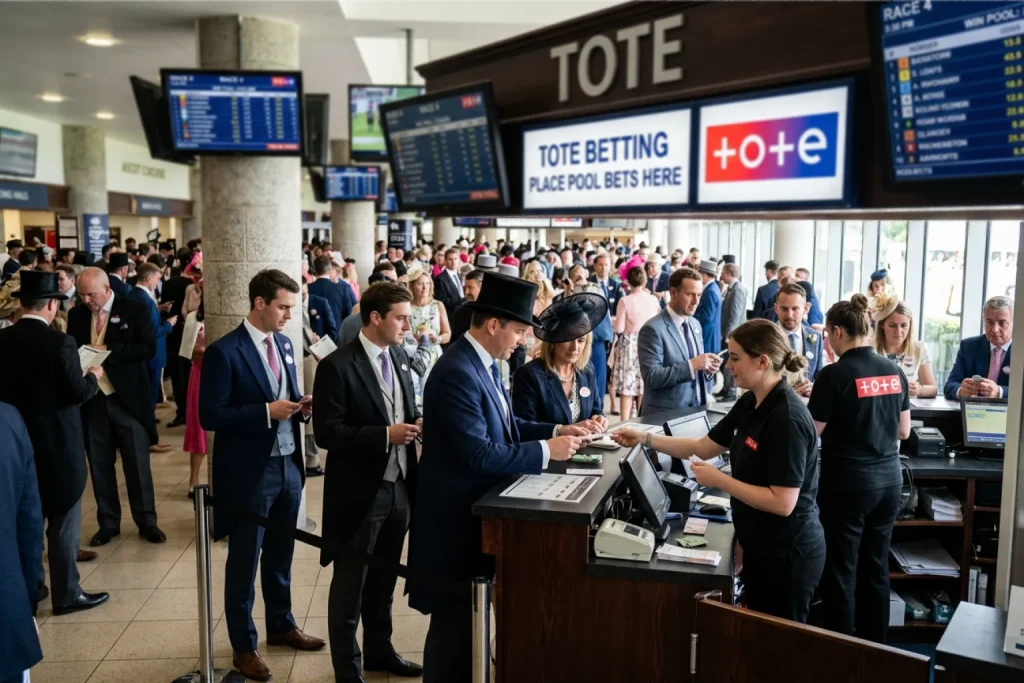
The betting ring at Ascot offers two distinct ways to wager: fixed-odds bookmakers who price each horse according to their market, and the Tote, which operates a pari-mutuel pool where the final dividend depends on the total money wagered. Most punters default to fixed odds without considering the alternative, but the Tote can offer better value in specific circumstances—and understanding when is part of being a sharper bettor.
The UK’s remote betting market is substantial. According to the Gambling Commission’s 2026-25 annual statistics, horse racing generated £766.7 million in gross gambling yield from remote betting alone, making it the second-largest sport after football. Within that market, pool betting represents a small but significant fraction—and Ascot, with its high-profile meetings and large on-course crowds, is one of the venues where pool betting can genuinely compete with fixed odds.
How the Tote Works
The Tote is a pari-mutuel system. Instead of offering fixed prices on each horse, the Tote collects all the money bet on a race into a pool, deducts a percentage (the takeout), and divides the remainder among winning bettors in proportion to their stakes. The final dividend is not known until after the race, because it depends on how much money was bet on the winner relative to the total pool.
The takeout on Tote win bets is typically around 13-14%, which is comparable to the margin built into bookmaker prices. The key difference is that the Tote price is determined by the betting public, not by professional odds compilers. If the public overestimates a horse’s chance, the Tote dividend on that horse will be lower than the equivalent fixed odds. If the public underestimates a horse, the Tote dividend will be higher.
Tote betting also offers exotic wagers that fixed-odds bookmakers do not match. The Placepot requires you to pick a horse to be placed in each of the first six races on a card; the Jackpot requires winners of the first six races. These bets are harder to win, but the dividends can be substantial when the pool rolls over or when the results produce few winning tickets.
At Ascot, the Tote pools tend to be larger than at smaller courses, which reduces volatility in the dividends. A pool of £500,000 on a big race will produce a more predictable dividend than a pool of £50,000 at a minor meeting. For punters who prefer pool betting, Ascot’s major fixtures offer the best opportunities.
How Fixed-Odds Bookmakers Work
Fixed-odds bookmakers price each horse according to their assessment of its winning chance, plus a margin that ensures profitability. When you bet at fixed odds, you know exactly what you will receive if your horse wins—the price is locked in at the time of your wager, and subsequent market movements do not affect your return.
The bookmaker’s margin—also called the overround—is the difference between the true probabilities of all outcomes and the implied probabilities of the prices offered. A perfectly efficient market would sum to 100%; in practice, bookmaker markets typically sum to 110-120%, depending on the competitiveness of the race and the liquidity of the market.
At Ascot, fixed-odds betting offers several advantages. Best Odds Guaranteed (BOG) promotions mean that if you take an early price and the SP is higher, you receive the better price. This removes some of the risk of betting early. Most major bookmakers offer BOG on UK horse racing, making it the default choice for many punters.
The UK has approximately 24.4 million active online betting accounts, and the overwhelming majority of wagers are placed at fixed odds rather than through pools. The liquidity in fixed-odds markets is typically excellent at Ascot, which means your bets are more likely to be matched at the price you want.
When Tote Pays More
The Tote can outperform fixed odds in several specific situations, and recognising these is the key to profiting from pool betting.
The first situation is when a well-backed horse loses. In a pari-mutuel system, if the favourite attracts a disproportionate share of the pool and then loses, the remaining horses pay higher dividends than their fixed-odds prices would suggest. This effect is most pronounced in big-field handicaps at Royal Ascot, where the favourite can attract 20-25% of the pool. If that favourite loses, the Tote dividends on the placed horses can be significantly higher than SP.
The second situation is when you are backing an unfancied horse in a race with heavy favourite support. If the favourite is 4/5 in the fixed-odds market and attracts 40% of the Tote pool, the remaining 60% is distributed among the other runners. A 10/1 shot in the fixed-odds market might return 14/1 or 16/1 on the Tote if the pool is heavily weighted towards the favourite.
The third situation involves exotic bets like the Placepot. These pool bets offer value that fixed-odds accumulators cannot match, because the dividends can grow substantially when the results go against the public. A Placepot that pays £500 to a £1 stake is not unusual at Ascot, and such returns would require a six-leg each-way accumulator at substantial prices to replicate at fixed odds.
The World Pool, which combines Tote pools from multiple countries, has increased liquidity on major races at Ascot. The bigger the pool, the more stable the dividend—and the more likely the Tote is to pay fairly on outsiders.
See also Ascot Prize Money Explained.
Which to Use and When
The practical answer depends on what kind of bettor you are and what bets you are placing.
For win singles on favourites and second favourites, fixed-odds betting with Best Odds Guaranteed is almost always the better choice. BOG removes the downside of betting early, and the liquidity in fixed-odds markets means you will get your bet on at the price you want. The Tote rarely outperforms fixed odds when backing short-priced horses.
For win singles on outsiders in big-field handicaps, the Tote can offer value. Check the approximate Tote odds against the fixed-odds price before placing your bet. At Royal Ascot and British Champions Day, the Tote displays estimated dividends on screens around the course. If the Tote price is better, take it.
For exotic bets like the Placepot, Jackpot, and Scoop6, the Tote is the only option. These pool bets offer returns that fixed-odds accumulators cannot match, and the bigger pools at Ascot mean the dividends are more predictable. If you enjoy building complex bets across multiple races, the Tote offers opportunities that bookmakers do not.
For place betting in small fields, fixed odds are usually better. The Tote’s place pool has a higher takeout than the win pool, and bookmakers typically offer better each-way terms in races with eight or fewer runners. At Ascot, where Group 1 races often feature small fields, this matters.
The sensible approach is to have both options available. Use fixed odds as your default, but check the Tote prices on outsiders before committing. Use the Tote for exotics. And pay attention to the pool sizes—bigger pools at major Ascot meetings mean more predictable returns and better value for punters who know how to exploit the pari-mutuel system. Ascot Tote vs Bookmaker — More on this topic at ascot betting today.
