
How Field Size Affects Your Betting at Ascot
 Available in US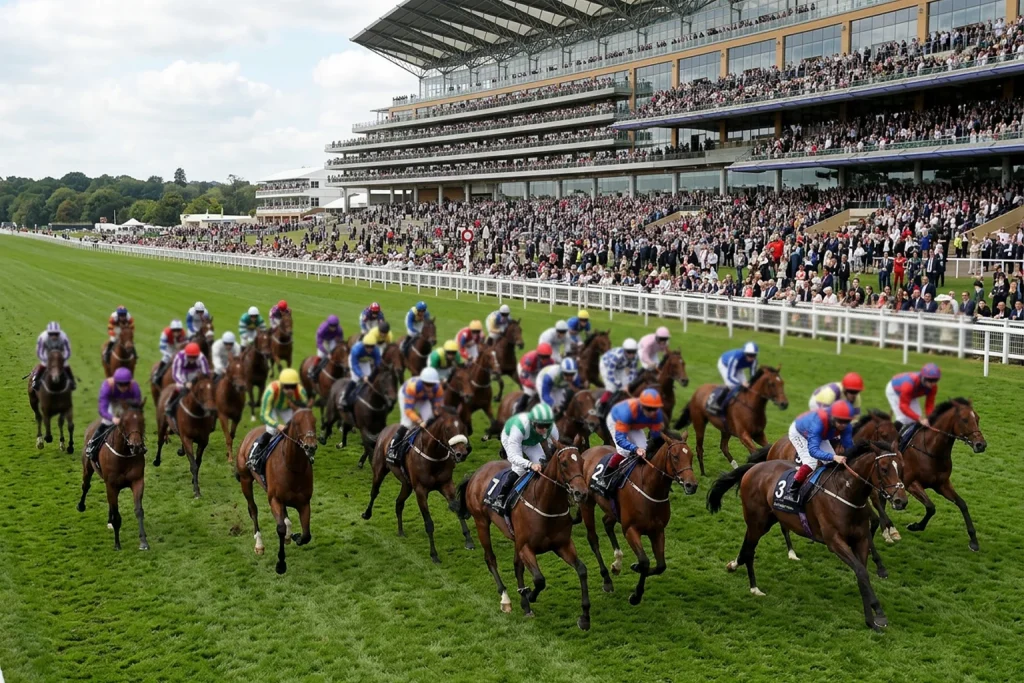
Field size fundamentally changes how you should bet on a race. A 20-runner Royal Ascot handicap presents different challenges and opportunities than a six-horse Group 1 with a warm favourite. Yet many bettors apply the same approach regardless of runner count, treating the Wokingham the same way they treat the Queen Anne Stakes. This misses the point entirely.
Average field sizes in British flat racing have declined to 8.9 runners in 2026, down from 9.14 the previous year. At Premier fixtures like Ascot, the numbers hold up better, with big-field handicaps still attracting maximum entries. Nick Smith, Ascot’s Director of Racing and Public Affairs, emphasised that field sizes are very important, especially in the World Pool era. Understanding why field size matters, and how to adjust your betting accordingly, separates analytical punters from those who bet blind.
Big Fields vs Small Fields: Different Games
A race with 20 runners operates under different rules than one with six. In big fields, pace becomes unpredictable. Multiple horses might contest the early lead, creating scenarios where front-runners burn out or hold-up horses find no room to challenge. Traffic problems emerge: a horse drawn wide may face an impossible task reaching a good position without expending energy it cannot spare for the finish.
Small fields simplify the race but complicate the betting. With fewer variables, form translates more reliably. The best horse on ratings usually wins unless something goes wrong tactically. This sounds like good news for form students, but it also means shorter prices and less scope for finding overlooked contenders. A six-runner Group 1 with a clear market leader might offer little beyond backing the favourite at prohibitive odds or hoping for an upset that rarely arrives.
Ascot’s race programme spans both extremes. The heritage handicaps at Royal Ascot routinely attract 20-plus runners, creating chaotic contests where anything can happen. The Group 1 races on the same card might feature eight or ten runners, enough for competition but few enough that class tells. Recognising which type of race you face before betting shapes everything from selection method to staking approach.
The tactical considerations differ too. In big fields, jockeys must make decisions early about positioning that commit them to particular race strategies. In small fields, riders can react to what unfolds, adjusting tactics mid-race. Understanding these dynamics helps explain why certain running styles prosper in certain contexts.
Variance plays a larger role in big-field outcomes. Even with sound analysis, the right horse might encounter traffic problems, suffer interference, or simply fail to find racing room at the crucial moment. Accepting this variance and staking accordingly prevents frustration when solid selections finish fourth or fifth through no fault of their own.
Field Size and Draw Significance
Draw bias at Ascot becomes more pronounced as field sizes increase. In a six-runner sprint, stall position matters less because horses have room to find their preferred position early. In a 20-runner handicap over the same distance, a horse drawn in stall 18 faces genuine disadvantage regardless of ability. The bunching effect amplifies any inherent track bias.
Data from Ascot’s straight course illustrates this clearly. Over five and six furlongs, low draws show significant profit over five-year samples, but primarily in races with 12 or more runners. In smaller fields, the advantage diminishes because horses drawn high can drift across without losing ground. The statistics that make stall 1 so profitable include many big-field handicaps where the bias operates at full strength.
Practical application requires context. When assessing a Royal Ascot sprint handicap with 22 declared runners, draw analysis deserves heavy weighting. When assessing a Listed sprint with eight runners, the same data matters far less. Many bettors apply draw bias findings uniformly, discounting well-drawn horses in small fields or backing poorly-drawn horses simply because they have low stall numbers. Adjusting for field size prevents these errors.
Field Size and Each-Way Value
Each-way betting transforms completely based on runner count. Standard each-way terms pay a quarter the odds for placing in the first three in fields of eight or more runners. At Royal Ascot handicaps with 16-plus runners, bookmakers typically offer enhanced terms: one-quarter odds for the first four, or sometimes one-fifth odds for the first five or six places.
These enhanced terms create genuine value opportunities in big fields. A horse at 20/1 in a 20-runner handicap with 1/4 odds for the first four places offers substantial place value. The same horse at 20/1 in an eight-runner race with standard three-place terms offers far less margin for error. Each-way betting becomes mathematically more attractive as field size increases, provided you select horses with genuine place chances.
Calculating place probability requires different analysis than assessing win chances. A horse might have only a 5% chance of winning but a 25% chance of placing in the first four. If the each-way place odds imply a lower probability than your assessment suggests, value exists regardless of whether the horse wins. This approach treats the place portion as a separate bet deserving its own analysis.
The strategy shifts accordingly. In small fields, win betting usually makes more sense unless you identify a clear place contender unlikely to win. In big fields, each-way betting allows you to profit from horses who run well without necessarily winning. Many successful Royal Ascot handicap bettors focus primarily on place probability rather than win probability, accepting that identifying the precise winner from 20-plus runners involves significant luck.
See also Mobile Betting at Ascot.
Bigger Fields, Better Odds?
Market liquidity correlates with field size in ways that benefit serious bettors. A 20-runner handicap attracts more betting interest than a four-runner novice stakes. More money in the market means tighter spreads on exchanges, more competitive fixed-odds pricing, and greater capacity to place significant bets without moving the market against yourself.
The relationship works through multiple channels. Bigger fields mean more opinions about potential winners, spreading money across more horses rather than concentrating on obvious favourites. Bookmakers respond by offering better prices across the board to attract business. The Tote pools grow larger, reducing the drag of takeout on potential returns. Everyone benefits from the increased activity.
Flat Premier fixtures at Ascot maintain average field sizes around 10.95, according to BHA Racing Report data, compared to declining averages elsewhere. This concentration of competitive racing explains why betting markets at Ascot remain liquid when markets at lesser courses thin out. For bettors who need to place stakes of meaningful size, Ascot’s consistent field sizes represent a practical advantage beyond the quality of racing itself.
The implication is straightforward: target races where field size supports the betting approach you prefer. If you specialise in each-way handicap betting, the big-field Ascot handicaps suit your method. If you prefer analysing small-field Group races, the pattern events offer appropriate context. Matching your style to field size maximises the edge your analysis provides. How Field Size Affects Your Betting at Ascot — More on this topic at ascot betting today.
