
Ascot Betting Strategy: Finding Course-Specific Edges
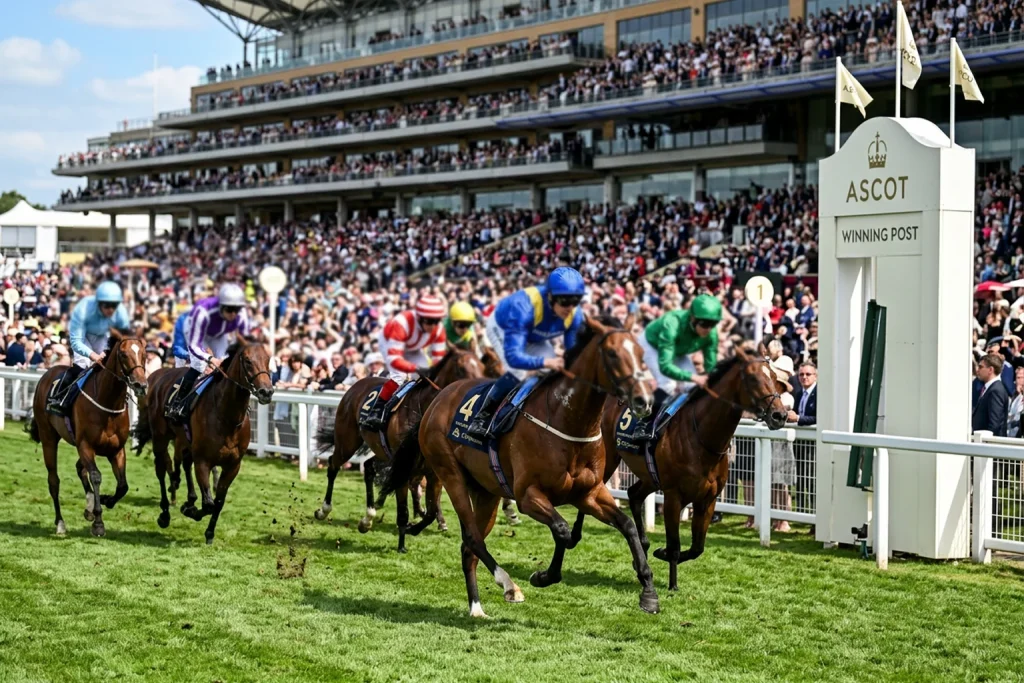
Ascot rewards punters who specialise. The course’s unusual demands mean that horses proven on this track outperform newcomers at a rate higher than almost any other venue in Britain. Draw bias, uphill finish, and premium competition combine to create patterns that repeatable analysis can exploit. Understanding these edges separates profitable betting from hopeful guesswork.
The track hosts 26 race days across Flat and National Hunt seasons, offering enough data to identify genuine trends rather than statistical noise. Draw position on the straight course favours low numbers on fast ground. Previous Ascot form correlates with future success more strongly than at Newmarket or York. The punishing final climb exposes horses that lack true stamina. These are not secrets, but applying them systematically requires discipline that most bettors lack.
Course Form: The Most Reliable Edge
Previous winning form at Ascot matters more than almost any other factor. Analysis of Royal Ascot 2018 showed that 11 of 30 winners had previously won or placed at the track. That figure excluded juvenile races, where horses have no opportunity to build course experience. Among older horses, the correlation between Ascot form and Royal Ascot success was stronger still.
This pattern persists because Ascot tests specific attributes. The uphill finish demands stamina that flatter tracks do not reveal. The undulating round course rewards horses that handle changes of gradient without losing momentum. The straight course’s draw bias and stiff finish punish horses that rely on raw speed without underlying constitution. Horses that have proven they can win here possess something that form at other tracks cannot guarantee.
When assessing a race, prioritise runners with the letter C or D in their Ascot form figures. A horse returning to the scene of a previous victory carries proven credentials. One that ran well here but disappointed elsewhere likely found conditions that suit. Conversely, horses making their Ascot debut face unknown challenges regardless of how impressive they looked at Newbury or Goodwood.
Course form becomes less relevant in juvenile races and when a horse steps up dramatically in class. A winner of a Class 4 handicap at Ascot might struggle in a Group 2, regardless of track familiarity. Use course form as a filter that elevates horses at similar ability levels, not as a trump card that overrides class assessment.
Using Draw as a First Filter
Draw bias on Ascot’s straight course is measurable and exploitable. Over five years of data, horses drawn in stall one over six furlongs have returned a level-stakes profit of +67.33 points, while those in stall seven show a deficit of -75.25 points. That swing of 142 points represents real money left on the table by punters who ignore starting position.
The bias operates most strongly when the ground rides fast. On good to firm or firmer going, the stands’ side rail offers better ground, and horses drawn low can hug it from start to finish. When conditions turn soft, the rail can become churned, and the advantage shifts or disappears. Checking the going report before applying draw filters prevents mechanical errors.
Over distances beyond seven furlongs, draw becomes less important because the round course involves turns that allow horses to settle into position regardless of starting stall. The first bend occurs far enough from the stalls that jockeys can adjust. Still, in ten-furlong races with large fields, a low draw saves lengths around the initial curve that a high draw cannot recover.
Using draw as a first filter means eliminating or downgrading horses in clearly disadvantaged positions before considering form, ratings, or jockey bookings. In a twenty-runner sprint handicap, removing the five worst draws immediately narrows the field. Among the remaining fifteen, other factors determine selections. This approach does not guarantee winners, but it avoids backing horses facing structural handicaps.
Reading the Pace: Front-Runners vs Closers
The uphill finish at Ascot changes how pace scenarios unfold. On flat tracks, a falsely run race allows closers to produce devastating late turns of foot. At Ascot, the climb blunts those finishes. Horses that lead into the final two furlongs hold on more frequently than pace analysis from other tracks would suggest.
Front-runners do not win every race. When multiple speed horses contest the lead, they burn each other out and set up the closers. The skill lies in reading the declarations and predicting which scenario will develop. A race with one obvious pace horse and several hold-up runners favours the leader. A race with three confirmed front-runners favours something sitting just off the pace.
Ascot’s Chief Executive Felicity Barnard has noted that the course is focused on refining the experience rather than expanding capacity. That focus extends to track maintenance that keeps conditions consistent within a meeting. Pace biases established on day one of Royal Ascot tend to persist through day five unless significant rain arrives. Watching the first two days reveals patterns that inform selections for the remainder of the week.
Running style data appears in form guides but requires interpretation. A horse described as a hold-up performer at Kempton might race more prominently at Ascot because its jockey knows that leaving too much to do on the hill costs positions. Tactical flexibility matters. Horses that can sit handy or lead and still finish strongly suit Ascot better than one-paced closers that need everything to fall right.
A Simple Staking Plan for an Ascot Day
A seven-race card at Ascot tempts punters to bet on every race. Resist. Not every race offers value, and betting without an edge guarantees long-term losses. A disciplined staking plan limits exposure and concentrates capital on genuine opportunities.
Start by setting a total budget for the day, an amount you can afford to lose entirely without financial stress. Divide that budget into units, with each unit representing one bet. Ten to twenty units for a race day provides enough flexibility to make multiple selections while capping downside. If your budget is £100 and you allocate twenty units of £5 each, you have ammunition for selective aggression.
Allocate more units to races where you have stronger opinions. A handicap that fits your draw and pace filters might warrant three units. A Group 1 with a short-priced favourite and no value elsewhere might receive zero. The goal is not to bet on every race but to bet with conviction when the edge exists.
Each-way bets count as two units because they comprise two separate wagers. A £5 each-way bet uses £10 of capital, or two units under the example above. Adjusting unit size when switching between win-only and each-way prevents accidental overexposure in large-field handicaps.
When Not to Bet
The hardest skill in betting is walking away from a race. Ascot’s prestige and atmosphere make every contest feel significant, but some races simply offer no edge. Recognising them preserves capital for opportunities that do.
Avoid races dominated by a prohibitively short-priced favourite. When a horse trades at 1/3 and the each-way places pay nothing interesting, there is no bet worth making unless you genuinely believe the favourite will lose. Hoping for an upset is not a strategy; it is entertainment dressed as investment.
Avoid races where you lack information. Maiden races for unexposed two-year-olds involve guesswork. So do conditions stakes where most runners are making their seasonal debut. Without form to analyse, you are betting on trainer reputation and market moves, neither of which provides a reliable edge against bookmakers with superior information.
Avoid races where your selection has a fatal flaw in the context. A horse with exceptional form but drawn in stall eighteen over six furlongs on fast ground faces a structural disadvantage that form cannot overcome. Backing it anyway because you like its style ignores the lesson that Ascot rewards preparation over sentiment.
By the final race of a Royal Ascot day, fatigue and alcohol impair judgement. If you have had a losing day, the temptation to chase becomes overwhelming. If you have had a winning day, overconfidence sets in. In either state, the seventh race is the most dangerous moment. Walking away with profits, or accepting a manageable loss, is the mark of discipline that separates serious punters from the crowd.