
Ascot Race-Day Bankroll: Managing Your Money Across the Card
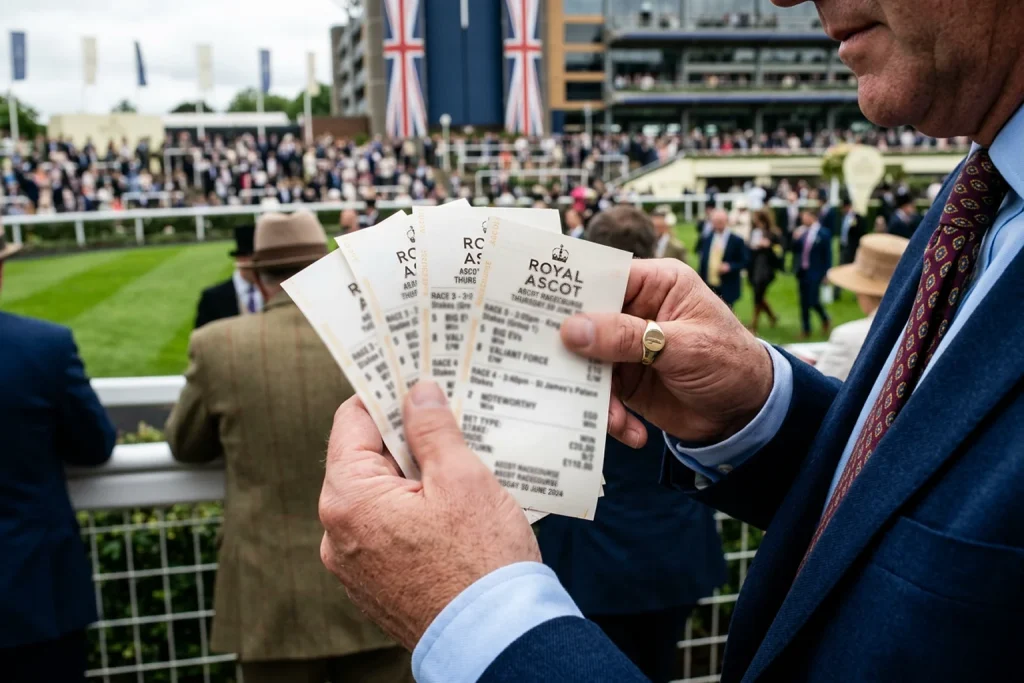
A day at Ascot typically features seven races. Seven opportunities to bet, seven chances to win or lose, and roughly three hours in which the difference between a profitable day and an expensive one is decided. Most punters arrive with vague intentions and flexible limits. They leave having spent more than planned, often without knowing exactly how much they wagered in total. This is not a strategy; it is surrender.
Bankroll management is the unsexy side of betting. No one boasts about their staking discipline at the pub. But the punters who show consistent results over seasons—not single afternoons—share one trait: they know exactly how much they are prepared to risk and exactly how they allocate it across a card. This discipline does not guarantee winners. It guarantees that when winners arrive, they are sized to matter, and when losers accumulate, they do not cause damage beyond repair.
Setting Your Day’s Budget
Your day’s betting bank should be money you can afford to lose entirely. This is the first principle. If losing £200 would cause financial stress, your budget is not £200. Betting with scared money distorts decisions: you back shorter prices for security, you chase losses desperately, you feel the sting of each defeat rather than accepting it as part of variance. Set an amount that, if lost, would be disappointing but not damaging. That is your bankroll for the day.
The figure will differ for everyone. A casual racegoer might allocate £50 or £100. A serious recreational punter might budget £300 to £500. Professional or semi-professional bettors operate on different scales entirely. What matters is not the absolute number but the relationship between that number and your overall financial position. Betting should be entertainment funded from discretionary income, not a financial strategy funded from essential reserves.
Once set, the budget is fixed. Do not visit the cash machine mid-afternoon. Do not transfer additional funds to your betting app because a promising opportunity appeared in race five. The budget exists precisely to prevent these decisions, which are almost always made under emotional pressure and almost always regretted. If you exhaust your bankroll after four races, your betting day is over. Watch the remaining races, enjoy the atmosphere, and accept that today was not your day.
Splitting the Bank Across Seven Races
Not every race deserves the same stake. Some races present clear betting opportunities—a strong opinion, favourable odds, a well-understood form picture. Others are puzzles with no obvious solution. Allocating equal stakes to both makes no sense. A more rational approach weights bets according to confidence and perceived edge.
One workable structure divides the day’s bank into units. If your budget is £200, consider each unit as £20. A weak opinion or speculative each-way bet receives one unit. A moderate opinion receives two units. A strong conviction, where the form and price align in your favour, receives three units. Across seven races, you might bet five of them: three at one unit, one at two units, one at three units. That totals nine units, or £180, leaving £20 in reserve for a late opportunity or to absorb unexpected variance.
The discipline required is resisting the urge to bet every race at maximum stakes. Racing’s appeal includes its unpredictability; no one gets seven out of seven correct. By scaling stakes to conviction, you ensure that your good judgements carry weight while your uncertain punts remain affordable. A losing one-unit bet is a shrug. A losing three-unit bet hurts but remains survivable. A losing seven-unit all-in bet on race four ends the day badly and often prompts further mistakes.
When to Increase or Reduce Your Stakes
Winning early in the day creates a psychological surplus. You feel like you are playing with house money, and the temptation to increase stakes on later races is strong. This is usually a mistake. The races do not know you won earlier; their difficulty is unchanged. Increasing stakes because you are ahead often means giving back gains through oversized bets on races where your edge is smaller. A better approach is to stick to your pre-planned unit sizes and bank the profits mentally, knowing they are real regardless of what happens next.
Losing early creates the opposite pressure: the urge to chase, to recover, to get back to even. This is where bankroll damage happens. A punter who loses three one-unit bets and then places a six-unit bet on race four to chase losses has abandoned any pretence of discipline. The probability of that six-unit bet winning is unchanged by the previous losses. The emotional state is not. Chasing compounds bad luck with bad decisions.
The exception to fixed stakes is genuinely new information. If the ground changes between races—rain arrives, the track rides differently—your opinions may shift. A horse you liked at 8/1 may now be 5/1 after a market move that reflects the changed conditions. In these situations, reconsidering stakes is rational. But be honest: are you reconsidering based on information, or based on emotion? If you cannot articulate what changed beyond “I feel more confident,” you are chasing under another name.
Stop-Loss Rules for a Race Day
A stop-loss is a pre-set point at which you stop betting for the day. It exists to prevent catastrophic sessions. Betting turnover on British racing fell 4.3% in 2026, with some quarters showing declines approaching 9%, partly reflecting regulatory changes around affordability checks. These checks exist because losses can spiral. Your personal stop-loss is your own affordability check, applied before outside forces intervene.
A reasonable stop-loss for a day at Ascot might be 70% to 80% of your starting bankroll. If you arrived with £200 and have lost £150 after four races, stop. The remaining £50 will not recover the day, and the emotional state that follows four losing bets is not conducive to good decisions. Walk away, watch the rest of the racing, and return another day with a fresh perspective and a full bankroll.
Stop-losses also apply to winnings. If you are up significantly—say, doubled your starting bank after three races—you might decide to protect a portion of those gains. A target stop-loss could lock in half the profit while allowing the rest to be wagered on remaining races. This guarantees a winning day regardless of what follows. The British Horseracing Authority provides guidance on responsible gambling that aligns with these principles: set limits, stick to them, and treat betting as entertainment rather than income.
Post-Meeting Review
The day does not end when the last race finishes. Serious punters review their bets, ideally the same evening while memory is fresh. Record what you backed, at what odds, for what stake, and the result. Note why you made each selection and whether the reasoning held up. A horse that finished fourth having been hampered at a crucial moment is different from a horse that finished fourth because it was simply not good enough. Both lost, but only one reflected a bad decision.
Over time, this record reveals patterns. Perhaps you consistently overbet on feature races and underbet on handicaps. Perhaps your strike rate on short-priced favourites is poor, suggesting you pay too much for false security. Perhaps each-way bets are carrying your results while win-only bets are dragging them down. Without data, these insights remain invisible. With data, they become the foundation for improvement.
Review your emotional state as well as your selections. Were there moments when frustration or overconfidence affected a decision? Did the atmosphere push you into a bet you would not have made at home? Ascot is a powerful environment; understanding how it influences your behaviour helps you prepare for next time. The goal is not to eliminate emotion—that is impossible—but to recognise it and account for it in your process. BHA Director of Racing Richard Wayman has noted that the betting environment remains challenging, with declining turnover creating tighter margins for everyone. In such an environment, the punters who maintain discipline and learn from their results have an advantage over those who simply repeat the same mistakes.