
How to Bet at Ascot Racecourse: A Practical On-Course Guide
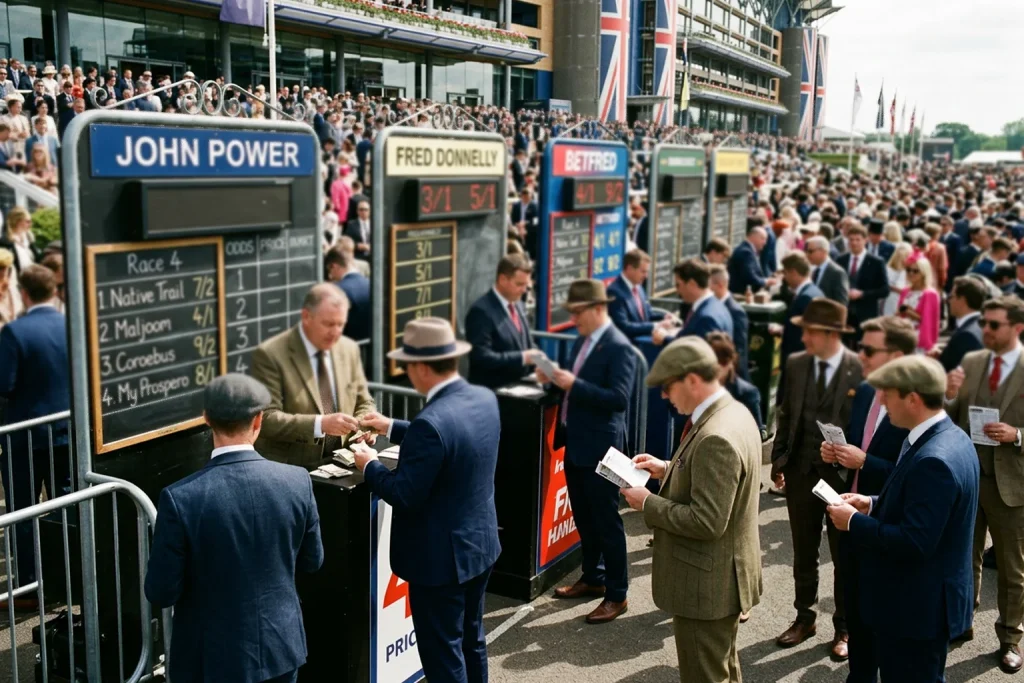
Betting at Ascot in person is a different experience from placing bets on your phone at home. The ring has its own rhythm, its own rules, and its own opportunities. For newcomers, the sight of rows of bookmakers with their boards and the theatre of the betting ring can be intimidating. It should not be. The on-course betting environment is designed to serve punters, and understanding how it works puts you on level terms with everyone else in the crowd.
Ascot’s annual attendance runs to over half a million across its 26 race days, with Royal Ascot alone drawing 286,541 visitors in 2026. Many of those racegoers bet on course, choosing between traditional bookmakers, the Tote, and increasingly, mobile apps used while standing in the enclosure. Each option has advantages. Knowing which to use, and when, can improve your returns without changing a single selection.
Betting With On-Course Bookmakers
The betting ring at Ascot contains dozens of licensed bookmakers, each displaying prices on boards or digital screens. These are independent businesses competing for your money, which means prices vary. The bookmaker at the end of the row may offer 9/1 on a horse while the one in the centre shows 8/1. Walking the ring and comparing prices before betting is standard practice for serious punters. It takes thirty seconds and can add points to your return over a day’s racing.
To place a bet, approach the bookmaker, state your selection and stake clearly, and hand over your cash. The bookmaker or their clerk will write a ticket confirming the horse, the odds taken, and the stake. Keep this ticket safe—you will need it to collect any winnings. The odds you take are fixed at the moment of the bet; if the horse drifts to 6/1 after you took 9/1, you keep the better price. Equally, if it shortens to 12/1, you do not benefit.
On-course bookmakers generally offer industry-standard place terms for each-way bets: one-quarter the odds for first, second, and third in fields of eight or more runners. Enhanced place terms, common with online bookmakers, are rarely matched in the ring. However, on-course bookmakers may offer better win prices, particularly on horses that are shortening in the online markets. The ring sometimes lags behind the exchanges by a few minutes, creating brief windows of value.
Cash is still the primary currency in the ring, though many bookmakers now accept card payments. Bring sufficient cash for your planned betting, broken into manageable notes. Nothing slows down a transaction like trying to pay for a £15 bet with a £50 note when the bookmaker is juggling a queue.
The Tote: Pool Betting Explained
The Tote operates differently from bookmakers. Instead of fixed odds, your stake goes into a pool with everyone else’s money on that race. After the result, the pool is divided among winning tickets, minus a percentage retained by the Tote. The dividend—effectively your odds—is only known after the race finishes. You might back a horse expecting roughly 5/1 and receive 7/1 if fewer punters shared your opinion. Or you might receive 3/1 if the horse was more popular than the bookmaker odds suggested.
Tote windows at Ascot are located throughout the enclosures. The process is simple: state your bet type, selection, and stake; pay; receive a ticket. Tote bet types include Win, Place, Exacta (first and second in order), Trifecta (first three in order), and the Placepot (picking placed horses in the first six races). The Placepot in particular has a devoted following, with pools often reaching six figures at Royal Ascot and dividends that can return hundreds of pounds from a small stake.
Pool betting suits certain situations. In big-field handicaps where an outsider wins, the Tote dividend frequently exceeds the starting price. When a well-backed favourite obliges, the dividend is usually lower than fixed odds would have been. As a rule, the Tote rewards contrarian thinking: backing horses the crowd has overlooked. If your approach involves finding value at long prices, the Tote can be your friend.
Using Betting Apps On Course
Mobile betting has transformed the on-course experience. Standing in the paddock, you can compare prices across a dozen bookmakers, place a bet, and confirm it before the horses reach the start. The convenience is undeniable. Many punters now treat on-course bookmakers as a backup rather than a primary option, using apps for most bets and only visiting the ring when an on-course price is noticeably better.
Signal at Ascot is generally reliable, though it can struggle during peak times at Royal Ascot when tens of thousands of phones compete for bandwidth. Do not assume your bet will go through in the final minute before a race. Place bets with time to spare, and confirm the bet slip shows the correct selection and stake. A misplaced tap can turn a £10 bet into a £100 bet, and bookmaker apps are not forgiving of user error.
Best Odds Guaranteed is a significant advantage of app betting. Most major bookmakers offer BOG on UK racing, meaning if you take 8/1 and the horse starts at 10/1, you receive the better price. On-course bookmakers do not offer this; the price you take is final. For horses likely to drift, app betting with BOG effectively gives you a free option on a better return. For horses likely to shorten, the on-course ring may offer value the apps have already priced out.
Cash out is another app feature with no on-course equivalent. If your each-way selection is travelling well at the two-furlong pole, you can lock in a profit before the horse even crosses the line. Whether this is wise is another matter—cash out prices favour the bookmaker—but the option exists. On-course bets offer no such flexibility; your ticket pays or it does not.
Collecting Winnings
With on-course bookmakers, you collect winnings by returning to the same bookmaker with your ticket after the race result is confirmed. The weigh-in announcement signals that the result is official and payouts can proceed. Present your ticket, and the bookmaker will pay your return in cash. If you bet with multiple bookmakers during the day, keep your tickets organised—losing a winning ticket means losing the money.
Tote winnings work similarly. Return to any Tote window with your ticket after the race. The dividend is displayed on screens around the course, so you will know what to expect. Tote tickets can also be claimed at other racecourses or via post if you leave Ascot without collecting.
For app bets, winnings are credited to your account automatically. You can withdraw to your bank or keep the balance for further betting. There is no collection process, which is convenient but also removes the psychological weight of holding cash winnings. Some punters find it easier to maintain discipline when they physically collect winnings and see the money in hand. Others prefer the frictionless app experience. Know which type you are.
Practical Tips for Race-Day Betting
Arrive with a plan. Decide before you enter the course how much you are prepared to lose, which races you intend to bet on, and roughly what stakes you will use. The atmosphere at Ascot, particularly during Royal Ascot, is intoxicating. It encourages impulsive betting. A pre-set budget protects against getting carried away after a winner—or chasing losses after a loser.
Check prices across all channels. Before any bet, compare the on-course bookmakers, the Tote indicative odds, and your app. This takes a minute. Over seven races, those minutes can add meaningful value. A point or two better on each bet compounds into a better day overall.
Use the parade ring and the pre-race build-up. On course, you have access to information that home punters do not: the look of the horses, the body language of connections, the murmurs in the crowd. This is imperfect information, but it is information nonetheless. A horse sweating heavily or playing up in the paddock may be telling you something. So might a trainer chatting confidently to owners.
Collect your winnings promptly. At the end of a busy race day, queues form at bookmaker pitches and Tote windows. If you have winning tickets, collect after each race rather than letting them accumulate. This also forces you to confront reality: are you up or down? Holding a wallet full of tickets creates an illusion; holding cash makes the situation clear. More information on race-day procedures and facilities is available at Ascot’s official website, including maps of betting locations within each enclosure.