
British Champions Day at Ascot: End-of-Season Betting Guide
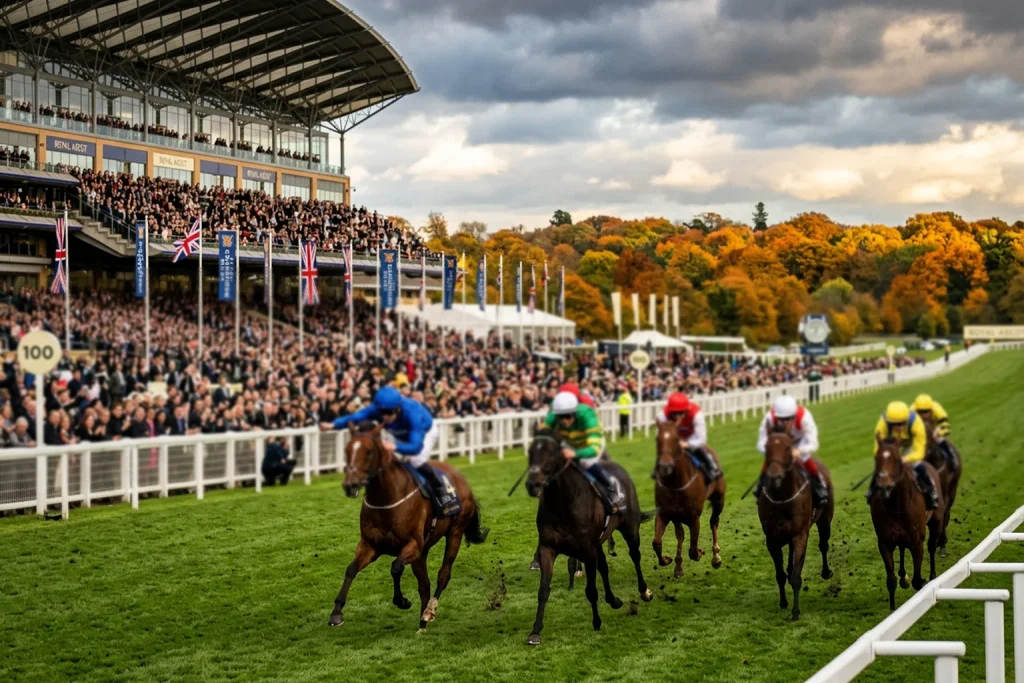
The Flat season does not fade quietly at Ascot. It ends with a full-volume finale: British Champions Day, the richest afternoon in the British racing calendar. Held on the third Saturday of October, the meeting compresses five Group 1 and Group 2 races into a single card, drawing horses that have been campaigned all season toward this climax. For punters, it presents a concentrated test of form assessment—five high-class fields, each shaped by the question of whether horses are peaking at the right moment or running on fumes.
Ascot hosts 26 race days annually and stages 13 Group 1 contests throughout the year. British Champions Day accounts for three of those Group 1s in a single afternoon. The prize money reflects the ambition: the Champion Stakes alone is worth over £1.3 million, making it one of the highest-value mile-and-a-quarter races in Europe. This is not an ordinary Saturday card. The betting market knows it, the trainers know it, and the horses are prepared accordingly.
What British Champions Day Means for Punters
The concept behind Champions Day is straightforward: bring the best horses together at the end of the season and let them settle the argument. In practice, this creates unusual betting conditions. Unlike Royal Ascot, where horses arrive fresh and fields often exceed twenty runners, Champions Day fields are compact. The average field size on British Flat cards has fallen to 8.9 runners in 2026, and premium fixtures like Champions Day often produce fields of eight to twelve in the top races. Smaller fields mean tighter markets, fewer each-way opportunities, and a sharper focus on form.
This is a punter’s day if you have done the homework. The form book is essentially complete. Every contender has run multiple times at Group level. There are no mysteries, only judgements. Has this horse improved since the summer? Is that one bouncing back from a below-par run at York? The information is all there; the skill lies in interpreting it correctly.
The ground adds another variable. October at Ascot rarely delivers fast turf. Soft or heavy conditions are common, and they reshape expectations. A brilliant miler on good ground may struggle when the going turns testing. Conversely, a horse with stamina reserves suddenly becomes more dangerous. Punters who track ground preferences closely gain an edge here that can be worth points at the odds.
Prize money also affects the entries. With over £4 million distributed across the card, trainers bring their best, and supplementary entries are common. The Champion Stakes in particular attracts late additions—horses whose Arc campaigns have ended and whose connections see one final opportunity. Watch for horses entered at a cost; those supplementary fees are not paid lightly.
The Feature Races: Champion Stakes, QEII, Sprint
Three races define the afternoon. The Champion Stakes, run over ten furlongs, serves as the headline act. It draws middle-distance horses from across Europe—some who contested the Arc, others who have been aimed specifically at this target. The race tends to favour horses with tactical speed and the ability to quicken on ground that often rides slower than it looks. Front-runners rarely win here. The nature of the round course rewards those who can travel, then accelerate when the race develops from the two-furlong pole.
The Queen Elizabeth II Stakes, despite losing ground to the Champion Stakes in profile, remains a genuine championship event for milers. The key question every year is whether a miler coming off a busy summer campaign has one more big run left. Many do not. The race has a history of producing surprise results when a lightly raced improver meets battle-hardened rivals on their way down. The market tends to underestimate freshness in October, and that can be worth exploiting.
The Champions Sprint rounds out the top-tier action. Sprinters are less affected by end-of-season fatigue—the races are shorter, the physical demands different. But ground becomes critical. A five-furlong specialist on firm turf may find six furlongs on soft ground a completely different examination. Draw matters less here than in the summer sprints, since the straight course at Ascot becomes a wide-open test of raw speed when the ground cuts up.
Beyond these three, the Long Distance Cup offers two miles for stayers, and the Balmoral Handicap provides a competitive betting heat with a larger field. The Balmoral, in particular, tends to attract punters seeking each-way value in a card otherwise dominated by short-priced favourites.
End-of-Season Form: Peaking or Fading?
October racing rewards a specific type of horse: one who has been managed carefully through the season, not flogged through the summer programme. The Champions Day winners list is dominated by horses with relatively light campaigns—four to six runs, rather than eight or nine. Trainers who target this meeting specifically tend to outperform those treating it as a consolation after other priorities.
Form lines require adjustment. A horse that finished third in the Irish Champion Stakes in September may have run the race of its life in defeat. Another that won a Group 2 in August may be on the decline by October. The time gap between runs matters. Horses returning after five or six weeks, freshened up for this target, consistently outperform those backing up within three weeks of their previous outing.
Physical signs become crucial. Trainers know their horses are at risk of going over the top, and those horses often show it. A horse that was light and athletic at Goodwood may appear dull-coated and heavy at Ascot. The parade ring tells part of the story, though it is an imperfect guide. What matters more is the pattern of the season: has this horse been raised in the weights and remained competitive, or has the handicapper caught up?
For Group 1 races, official ratings matter less—these are weight-for-age contests. What matters is trajectory. A three-year-old improving through the autumn typically has an advantage over an older horse defending a rating earned months earlier. The market often undervalues youth at Champions Day, especially when a young horse is stepping up in trip or tackling soft ground for the first time.
Betting Strategy for Champions Day
The compact fields and high-quality runners mean traditional each-way betting offers limited value in the Group 1 races. With eight or nine runners and bookmakers paying three places at one-fifth odds, the maths often does not work unless you can identify a genuine place prospect at double-digit prices. The Balmoral Handicap is the exception, regularly attracting fields of fifteen-plus and offering better each-way terms. BHA data confirms this pattern across premium fixtures.
Ante-post betting has appeal for those who follow the autumn trials closely. Horses that win their prep races in September often shorten significantly by Champions Day, and taking an early price before the market moves can add value. The risk is ground-dependent non-runners—a horse prepared for good ground may be withdrawn if the forecast turns wet. Some bookmakers offer non-runner no-bet terms on Champions Day markets, and these should be preferred.
The on-the-day approach should focus on three factors: ground, freshness, and position in the market. Ground has been mentioned. Freshness means favouring horses with lighter campaigns or longer gaps since their last run. Position in the market means watching for overbet favourites in the Group 1s—often horses with big reputations but questionable form on soft ground, or those who have already had long seasons.
Staking should reflect the condensed nature of the card. Five races in three hours, with significant gaps between them, creates pressure to bet every race. Resist it. Two or three considered bets, sized appropriately, will serve better than a scattergun approach. The Balmoral Handicap in particular often sees punters chasing losses after the Group 1s; if you reach that race without a clear opinion, skip it. British Champions Day ends the season. There is no meeting next week to recover mistakes. Bet what you know and leave the rest.