
Famous Ascot Races: Historic Betting Moments and Lessons
 Available in US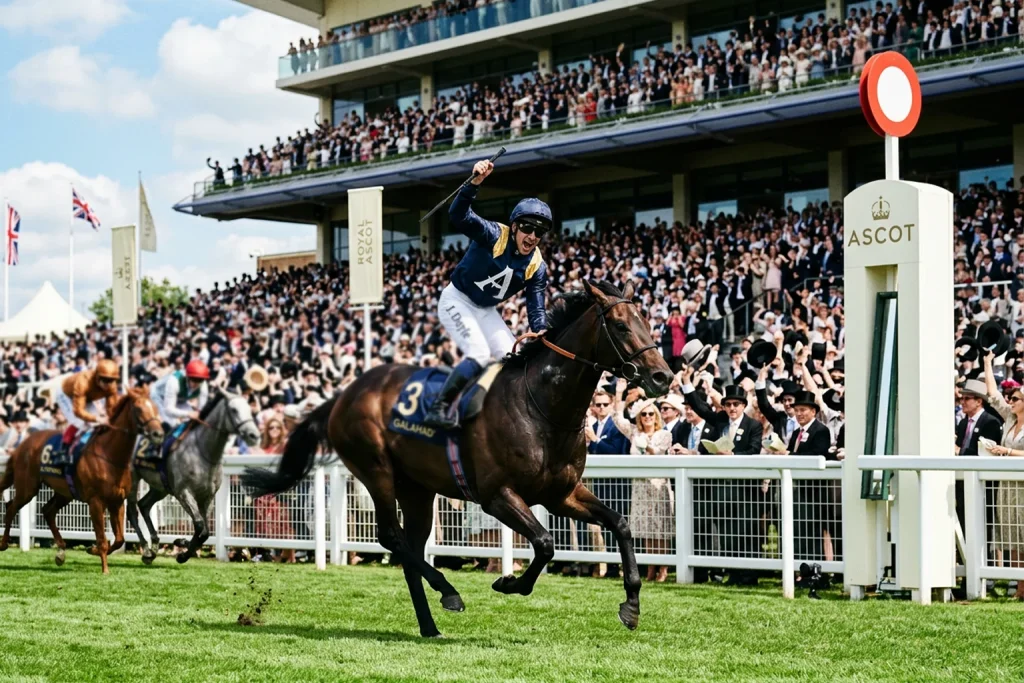
Ascot Racecourse has staged over three centuries of racing, and within that history lie moments that shaped how punters think about odds, certainty and value. Some races confirmed what the market already believed; others obliterated it entirely. Both types carry lessons — about when to trust a dominant favourite, when to look beneath the obvious, and when the course itself produces outcomes no form study could predict.
Today, Ascot stages 26 race days annually and hosts 13 Group 1 contests — more than any other flat venue in Britain. The prize money reflects this status: the 2026 King George VI and Queen Elizabeth Stakes will carry a purse of £2 million, becoming the first British race to reach that figure. Record attendance figures — Royal Ascot 2026 drew 286,541 visitors across five days, up 4.8 percent on the previous year — demonstrate that the course continues to attract both serious punters and the wider racing public.
Within this modern context, the historic races matter not merely as nostalgia but as data points. How did the market price Frankel in his final British appearance? What patterns emerged across Yeats’ four consecutive Gold Cup victories? When outsiders defied their odds at Ascot, what conditions made those upsets possible? The answers reveal principles that apply far beyond individual horses.
Frankel’s Queen Anne: The Certainty
On 19 June 2012, Frankel lined up for the Queen Anne Stakes as the shortest-priced favourite in Royal Ascot history. The betting reflected absolute market conviction: 1/10 in places, effectively unbackable for profit. His eleven consecutive victories had included demolitions at Newmarket, Goodwood and Ascot itself. The question was not whether he would win but by how much — and whether backing such a prohibitive favourite made any rational sense.
He won by eleven lengths. Tom Queally barely moved on him. The official margin flattered the opposition; Frankel had been easing down for the final furlong. For punters who had backed him ante-post at longer odds — 4/6 was available months earlier — the race validated a core principle: when class differential is absolute, early money captures residual value before the market compresses to nothing.
The lesson cuts both ways. Anyone backing Frankel at 1/10 on the day needed to stake £1,000 to win £100, an appalling risk-reward ratio regardless of certainty. The horse delivered, but the bet remained poor value. Conversely, laying Frankel — betting against him — offered enormous potential returns for a single bad stride or interference incident. Some exchange punters took that gamble. They lost. The broader point: even when a horse appears unbeatable, the market price determines whether the bet has merit. Frankel’s Queen Anne was a racing triumph and a betting irrelevance by the time the stalls opened.
Yeats: Four Gold Cups
Between 2006 and 2009, Aidan O’Brien’s Yeats won the Ascot Gold Cup four times consecutively — a feat unprecedented in the race’s two-hundred-year history and unrepeated since. His dominance over two miles and four furlongs at Ascot was so complete that by his fourth victory, the market had shortened him to 8/13. Punters who followed him from the beginning saw starting prices of 9/2, 11/8, 8/11 and finally that cramped 8/13. The trajectory illustrated how sustained excellence erodes betting value.
Yet Yeats also demonstrated something counterintuitive: specialist course form can override age and mileage concerns. By his fourth Gold Cup, he was seven years old, ancient by flat racing standards, and had been in training for five consecutive seasons. Conventional wisdom suggested decline. The market remained sceptical enough to offer 8/13 rather than 1/3 — and he won by a length and a half, as professional as ever.
For Ascot punters, Yeats represents the prototype of the course specialist. His action suited the undulating terrain. His stamina matched the Gold Cup’s relentless two-mile-four test. His racing brain handled Ascot’s tendency toward tactical races run at variable pace. When evaluating stayers at Ascot today, the Yeats template remains relevant: previous course form, proven stamina, demonstrated tactical flexibility. Horses matching those criteria at bigger prices than the market suggests deserve serious consideration.
Stradivarius: The People’s Stayer
If Yeats was clinical, Stradivarius was theatrical. John Gosden’s stayer won the Gold Cup in 2018, 2019 and 2020, narrowly missed a fourth in 2021, and returned at age eight to finish third in 2022. His career arc traced both the possibilities and limitations of backing proven performers: early Gold Cup wins came at 5/1 and 10/11, offering genuine value, while later attempts saw him sent off at odds-on despite rising doubts about his sustained dominance.
What made Stradivarius instructive for punters was his transparency. He ran his races visibly, travelling prominently and quickening when asked. You could see whether he was going well or labouring. In 2021, when Subjectivist beat him by four and a half lengths, experienced observers sensed the danger from the two-furlong pole — Stradivarius was not travelling with his usual fluency. The market had him at 5/4; sharper eyes on the parade ring might have noted his less imposing demeanour.
The lesson here concerns visual information. Ascot punters have access to the parade ring, the pre-race canter, the horses loading into the stalls. Stradivarius, being such a character, telegraphed his wellbeing — or lack thereof. Backing stayers blindly on reputation ignores the advantages that on-course attendance provides. When a proven performer looks below par, the smart move is to pass rather than assume past form will compensate for present condition.
Upsets and Outsiders: When the Form Book Burns
For every Frankel, Ascot produces a shock. The 2020 Royal Hunt Cup saw outsiders dominate a twenty-runner handicap on desperate ground, with the first three home returning at 20/1, 25/1 and 33/1. Soft conditions, a wide-open handicap, and the chaos of a cavalry charge combined to produce an outcome no algorithm predicted confidently. Punters who had each-way cover on mudlarks celebrated; those who backed class horses unsuited by the ground watched them flounder.
Big-field handicaps at Royal Ascot have historically been fertile ground for upsets. The Wokingham, the Royal Hunt Cup, the Britannia — all regularly produce winners at double-figure prices. The conditions explain why: large fields amplify randomness, extreme going shifts the balance toward specialists, and the compressed handicap ratings leave little separating twenty runners. In such races, value often lies not in identifying the winner but in constructing each-way portfolios that capture place returns when chaos unfolds.
The course itself contributes to these shocks. Ascot’s stiff uphill finish punishes horses who have travelled too keenly. The round course’s turn into the straight disadvantages wide draws under certain conditions. The straight course’s draw bias can swing violently depending on ground. All these factors create variance — the enemy of short-priced favourites and the friend of patient each-way punters. Understanding when conditions favour upsets matters as much as studying individual form.
See also Ascot Betting for Beginners.
What History Teaches Punters
Three principles emerge from Ascot’s historic races. First, absolute class compresses odds beyond usefulness — backing Frankel at 1/10 was correct in outcome but poor in process. The skill lies in recognising dominance early, when prices still contain margin. Second, course specialists outperform their ratings at Ascot more reliably than at flatter, less demanding tracks. Yeats and Stradivarius both exploited this; lesser horses with proven Ascot form do the same at bigger prices.
Third, certain race types at Ascot structurally favour outsiders. Big-field handicaps, soft-ground sprints, and staying tests run at uneven pace all produce variance that benefits patient each-way punters. Chasing short prices in such races fights the course’s natural tendencies. Better to identify the conditions and adjust accordingly — backing proven performers in small-field Group races, spreading stakes across bigger-priced contenders in twenty-runner handicaps.
History also reminds us that Ascot evolves. Prize money has grown dramatically — the 2026 purse of £17.75 million across the season, rising to a projected £19.4 million in 2026, attracts deeper international fields and higher-quality handicappers than a decade ago. What worked in Yeats’ era requires calibration for today’s market. But the core lessons hold: respect course form, recognise when prices have compressed past value, and understand that Ascot’s unique layout creates patterns no generic approach can capture. The ghosts of great races still have something to teach. Famous Ascot Races — More on this topic at ascot betting today.
