
King George at Ascot: Betting Guide to Britain’s Richest Race
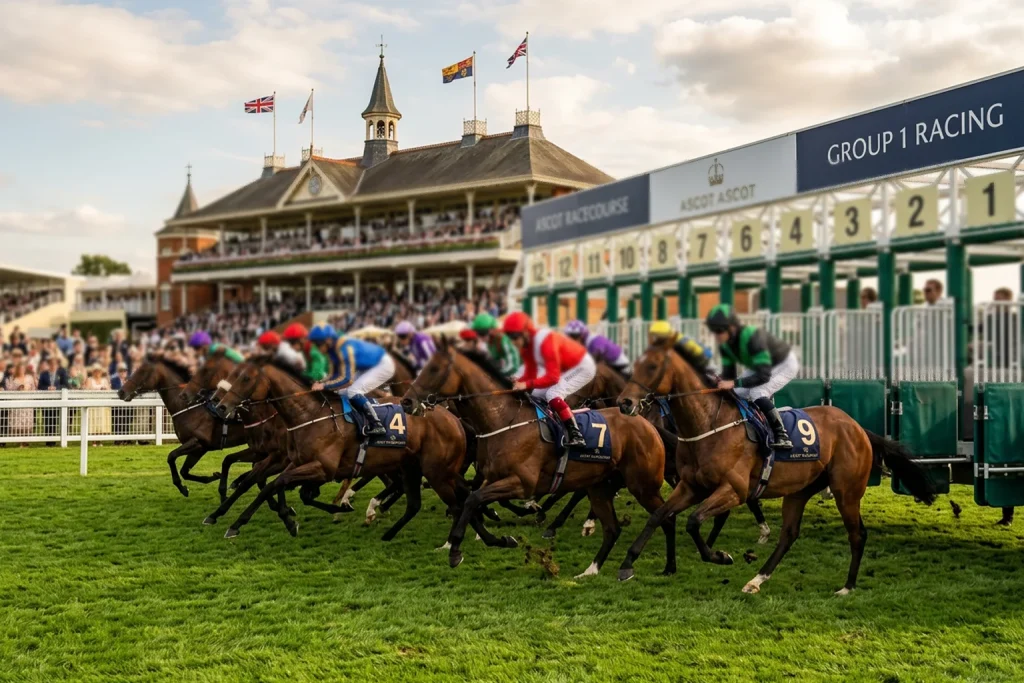
The King George VI and Queen Elizabeth Stakes became Britain’s first two-million-pound race in 2026. Run over a mile and a half at Ascot in late July, it brings together Derby winners, Arc contenders, and proven Group 1 performers in a mid-season championship that often determines year-end honours. For punters, it offers one of the clearest tests of elite middle-distance form on the calendar.
The race rewards class above all else. Unlike handicaps where weight manipulations and draw advantages create value, the King George is a conditions race that exposes pretenders. The best horse on the day usually wins. Understanding which profiles succeed, how the race unfolds, and where betting value appears requires examining decades of results and applying them to the current generation.
Britain’s First £2 Million Race
Ascot announced in late 2026 that the King George would carry a £2 million purse in 2026, making it the richest race ever staged in Britain. The uplift from £1.5 million in 2026 reflects Ascot’s commitment to attracting the best horses from Europe and beyond. Connections now face a genuine choice between targeting the King George or saving their runner for autumn campaigns, a decision that shapes summer form across the Flat calendar.
The prize money increase followed Ascot’s record turnover of £113.1 million in 2026 and formed part of a broader commitment to racing’s sustainability. Felicity Barnard, the course’s Chief Executive, stated: “We are delighted to be making these increases in prize-money for 2026, demonstrating our commitment to the sport and focus on rewarding participants.” The King George benefits directly: higher purses attract better horses, better horses attract bigger crowds, and bigger crowds generate the turnover that funds future increases.
For bettors, the financial context matters because it influences which horses appear. When the King George offered £1.25 million or less, some connections preserved their horses for the Arc, reasoning that a mid-season defeat might harm autumn odds more than the prize justified. At £2 million, that calculation changes. Expect stronger fields going forward, which means more competitive racing and, potentially, more value in identifying overlooked contenders.
The race takes place on King George weekend, traditionally the final Saturday of July. The supporting card includes Group 2 and Group 3 contests that attract quality runners across distances. A full day’s betting at Ascot during this meeting combines premium Flat racing with summer ground conditions that typically ride good to firm.
What Wins the King George?
Three-year-olds dominate the King George honour roll. The weight-for-age scale gives them significant pounds from older horses in late July, and Classic winners entering the race in peak form have proven hard to stop. Enable won the race three times, each victory coming at a different stage of her career, but her first success as a three-year-old followed the Oaks and preceded her first Arc triumph.
That said, older horses have their moments. Goliath, Dahlia, and more recently Torquator Tasso showed that proven middle-distance performers can handle the Ascot test when the three-year-old generation lacks depth. The market tends to favour Classic winners, which means older horses returning from successful campaigns occasionally offer value against inflated younger rivals.
Ascot’s round course suits horses that travel well and quicken in the final half mile. The sweeping bends allow jockeys to position their mounts without wasting ground, and the uphill finish separates quality from hype. Hold-up horses with finishing kicks have a strong record because the gallop rarely goes fast enough early to stretch stamina. Front-runners need exceptional class to dictate throughout.
Ground preferences matter. Enable handled anything from good to firm to soft. Other winners have needed specific conditions. When the forecast predicts rain for King George weekend, recalculating chances based on ground suitability can reveal shifts in value that the market has not fully absorbed.
The race’s position in the calendar also creates tactical considerations. Horses targeting the Arc in October need to demonstrate wellbeing without leaving their best effort on the Ascot turf. Some trainers view the King George as a stepping stone; others treat it as a primary target. Reading stable intentions through the racing press and morning gallop reports helps identify which runners arrive fully wound up and which are merely passing through.
Derby Winners at the King George
Epsom Derby winners have a complicated relationship with the King George. The six-week gap between Epsom and Ascot leaves little recovery time, and the round-course demands differ from Epsom’s downhill-then-uphill contour. Some Derby winners thrive; others bounce badly. Identifying which pattern will apply requires reading the Derby performance in context.
A Derby winner that powered away in the final furlong, hardly coming off the bridle, arrives at Ascot with reserves. One that survived a battle through the final quarter mile has had that effort take something out of it. Watching how the Derby unfolded tells you more about King George prospects than the winning distance suggests.
Galileo won both races in 2001, as did Generous in 1991. These horses possessed the class to dominate their generation regardless of timing. When a Derby winner looks exceptional rather than merely opportunistic, backing it in the King George makes sense even at short odds. Exceptional horses overcome scheduling concerns.
Irish Derby winners provide an alternative route. The Curragh race falls two weeks after Epsom, allowing a fresh horse to target Ascot with a similar preparation. French Derby winners rarely appear because the French programme steers them towards autumn targets, but when one does cross the Channel, it often runs well because European trainers view the King George as the mid-season championship it deserves to be.
How to Bet the King George
Fields typically number between six and twelve runners, making standard each-way terms unattractive. Three places at one quarter odds require genuine outsiders to offer any place value. Win-only betting on a principal contender or opposing short-priced favourites with a reasoned angle defines the sensible approaches.
The market forms early because the contenders are known quantities. Derby winners, Eclipse winners, and proven Group 1 performers do not surprise anyone with their presence. Prices stabilise by the morning of the race, with limited opportunity for late value unless news breaks regarding ground preferences or fitness doubts. Ante-post betting offers larger prices but carries withdrawal risk; non-runner no-bet terms become available roughly two weeks before the race.
Trainer records deserve attention. Aidan O’Brien has saddled multiple winners, but his strike rate reflects volume as much as prowess. John Gosden and latterly John and Thady Gosden have targeted the race with precision, often peaking horses specifically for late July. When an O’Brien runner faces a Gosden challenger at similar odds, the Gosden horse has historically outperformed its price.
Jockey bookings signal intent. Ryan Moore on an O’Brien second string suggests the stable’s first choice is considered the better chance. Frankie Dettori’s historical association with Enable defined the race for several years; his successor on a leading contender inherits both expectation and responsibility. Watch where the big names commit.
The King George rewards straightforward analysis. Class tells, form holds, and champions confirm their status. Betting against the best horse in the race rarely succeeds unless you have identified a specific vulnerability. Find the class act, assess the price, and bet accordingly. Complexity adds nothing when the test itself is so pure.