
Long Walk Hurdle at Ascot: Staying Hurdle Betting Guide
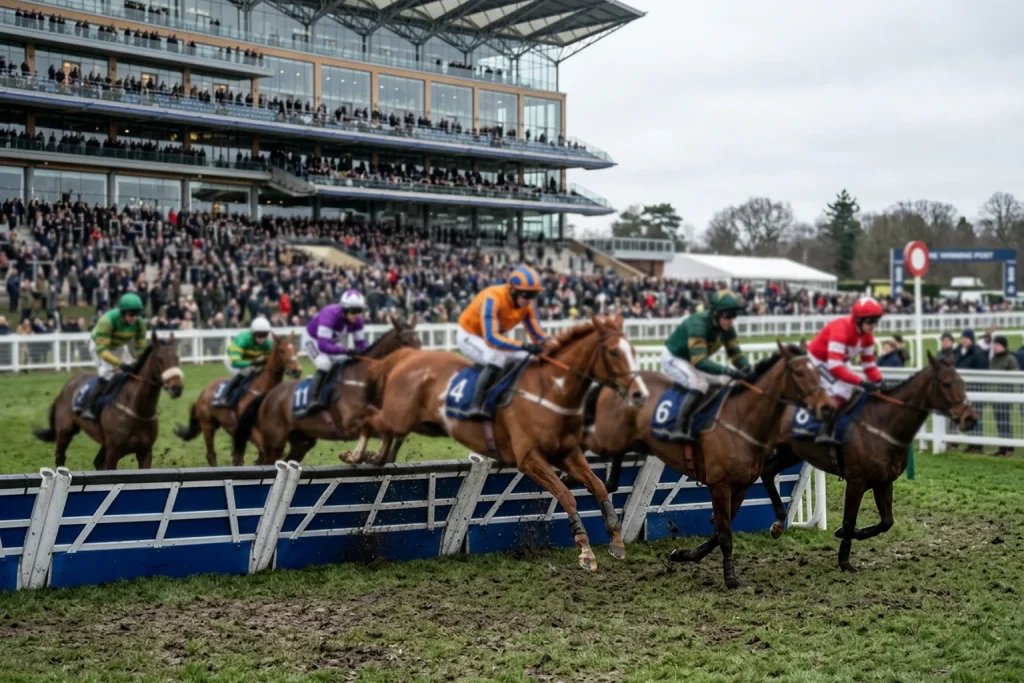
The Long Walk Hurdle runs on a December Saturday at Ascot, and for staying hurdle enthusiasts, it marks the real start of the championship season. This Grade 1 contest over three miles attracts the best long-distance hurdlers in training, many of whom will go on to contest the Stayers’ Hurdle at Cheltenham in March. For punters, it is one of the most valuable trials on the winter calendar—historical data from OLBG shows how Ascot’s winter races consistently inform Festival markets.
Ascot hosts 26 race days annually, with nine devoted to National Hunt racing between November and April. The Long Walk Hurdle is the centrepiece of the December fixture, and the race has a habit of producing performances that reshape the Stayers’ Hurdle market. Win here impressively, and you will likely start favourite at the Festival. Struggle here, and the market will notice.
What the Long Walk Demands
Three miles over hurdles at Ascot is a genuine test of stamina. The course is right-handed, galloping in nature, and features that characteristic uphill finish that saps tired horses in the final two hundred yards. The December going is typically soft or heavy, which amplifies the stamina demands and turns the race into an examination of constitution as much as ability.
The Long Walk is not a race for horses who only stay by racing lazily. It requires horses who can travel through the race, jump efficiently at a sustained pace, and still quicken when the race develops from two out. The best Long Walk winners are those who make the race look comfortable until the final hill, then pull away as rivals begin to empty.
Field sizes in the Long Walk tend to be small. According to OLBG’s Ascot data, average field sizes across National Hunt racing have dropped to 7.84 runners, and Grade 1 staying hurdles often attract fewer still. With five or six runners typical, the race often comes down to a duel between the two market leaders. This concentration of quality simplifies the betting but reduces each-way value to almost nothing.
The fences at Ascot are standard hurdles, but the track’s configuration places a premium on jumping rhythm. Horses who fiddle their hurdles or lose ground through indecision are unlikely to win at this level. The Long Walk rewards the horse who can flow through their obstacles and maintain momentum without wasting energy.
Winner Profiles and Trends
The Long Walk Hurdle has been dominated by established stayers in recent years. Horses who arrive here without proven form over three miles in testing ground are unlikely to upset the established order. The race rewards experience and class, and first-time starters at the distance are a significant risk.
Age trends favour horses between six and nine years old. Younger horses sometimes lack the physical maturity to sustain a three-mile effort in winter ground, while older horses may have lost the edge needed to compete at Grade 1 level. The sweet spot is a horse who has been racing over staying trips for at least two seasons and has already demonstrated the ability to win or place in graded company.
Trainers who specialise in staying hurdlers have dominated the race. Nicky Henderson and Paul Nicholls have won multiple renewals between them, and horses from smaller yards rarely upset the pattern. This is not to say outsiders cannot win—racing produces surprises—but the Long Walk is structured to favour quality over chaos. If you are looking for a 20/1 shot, this is probably not the race to find it.
Recent winners tend to share a racing style: held up in the early stages, produced with a challenge from two out, and able to assert on the run to the last hurdle. Front-runners have won the Long Walk, but they are the exception. The race tends to unfold at a true pace, and horses who expend energy early often pay for it on the final hill.
Where to Look for Form
The most reliable form for the Long Walk comes from other Grade 1 staying hurdles. The Stayers’ Hurdle at Cheltenham, the Liverpool Hurdle at Aintree, and the French Champion Hurdle are the key reference points. Horses who have run well in these races tend to handle the Long Walk’s demands, provided they have the freshness to perform in December after what may have been a long season.
Autumn form from the Coral Hurdle at Ascot itself is particularly relevant. The race is run over two and a half miles on the same track, and horses who have performed well there often progress to the Long Walk. The step up in distance suits improving stayers, and the course experience is valuable when the pressure comes in the closing stages.
French raiders occasionally target the Long Walk, and they should not be dismissed. The French staying hurdle division is competitive, and horses who have won or placed in Grade 1 company in France are capable of translating that form to British conditions. The going in France during the autumn is often testing, which prepares horses for the heavy ground they may encounter at Ascot in December.
What matters less than you might think is flat form. Some staying hurdlers began their careers on the flat and retain the cruising speed to be effective over hurdles, but the Long Walk is not won by horses who are simply outstaying moderate rivals. It requires a combination of stamina, class, and tactical nous that flat form alone cannot predict.
Betting the Long Walk
The Long Walk Hurdle is a race to approach with discipline. Small fields and short-priced favourites mean the value is often thin, and backing a 5/4 shot to return a modest profit requires conviction. If you do not have a strong view, this is a race to watch rather than bet.
Each-way betting is rarely attractive in the Long Walk. With five or six runners and place terms of 1/4 odds for two places, the place component offers little cushion. The exception is when you believe a genuine outsider has a chance to hit the frame—but genuine outsiders are rare in Grade 1 staying hurdles.
Ante-post value exists if you can identify the Long Walk winner before the market converges. The race falls in mid-December, and the Stayers’ Hurdle market is often still relatively open. An impressive Long Walk winner will shorten in the Festival betting, sometimes by several points. If you back them before the Long Walk and they deliver, you hold a position at a price that no longer exists.
The going report is essential. December at Ascot means soft or heavy ground more often than not, and horses who have never encountered testing conditions are a risk. Check the going history in a horse’s form summary before committing your stake. A horse who has won on good ground may not handle the holding surface, and the Long Walk is not the place to find out.
Finally, respect the favourite. The Long Walk has not produced many shock results in recent years, and the market leader has an excellent record. If you cannot find a reason to oppose the favourite, consider whether you should be betting at all. Sometimes the best value is no bet.