
Pace Bias at Ascot: Front-Runners, Hold-Up Horses and the Data
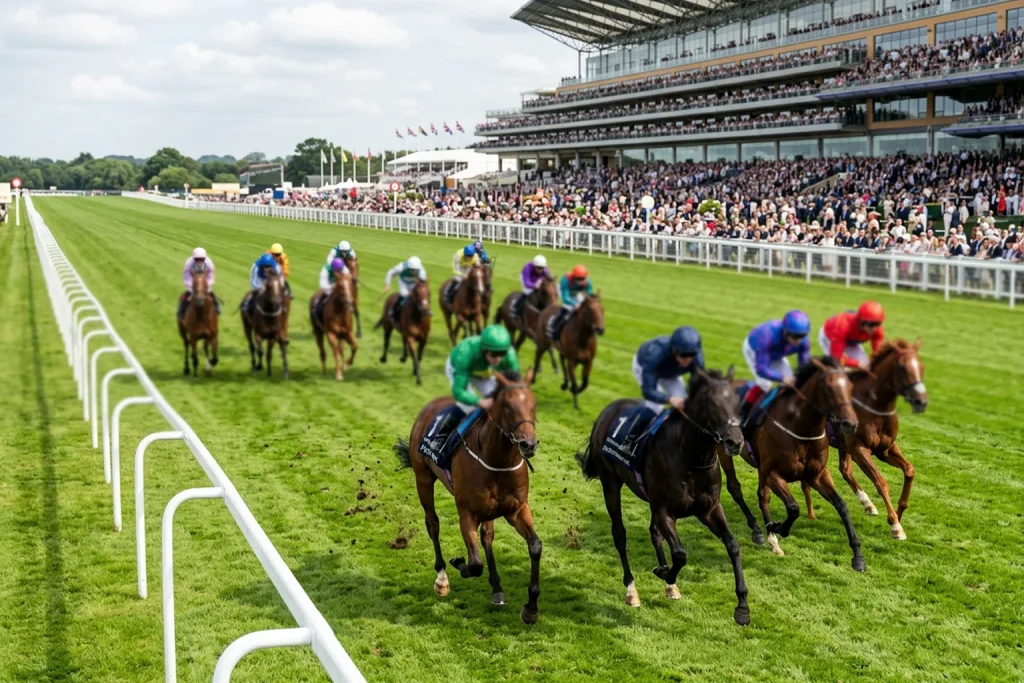
Pace is the invisible architecture of any horse race. It determines where the winning move comes from, which running styles prosper, and which horses expend too much energy too early. At Ascot, where the straight course and round course demand different tactical approaches, pace analysis becomes a genuine betting edge — and one that most casual punters ignore entirely.
The instinct for many bettors is to back the fastest horse over the trip. This is simplistic. A horse with blazing early speed may dominate if it leads unchallenged, but if three other front-runners are drawn alongside and determined to contest the lead, none of them will have anything left for the finish. Understanding who makes the pace, who tracks it, and who closes from behind allows you to visualise the race before it happens — and bet accordingly.
At Royal Ascot 2018, analysis showed that 11 of 30 winners had previous course form. But within that cohort, the winners’ running styles varied dramatically depending on the race shape. Pace prediction, combined with draw knowledge and going assessment, creates a layered model that separates systematic bettors from those who simply study a racecard and pick a name. This guide explains how pace works at Ascot, where the biases lie, and how to use that knowledge.
Pace on the Straight: Speed vs Stamina
Ascot’s straight course covers five furlongs to one mile, finishing uphill. That incline changes everything. A horse who makes all on a flat track may struggle here because the gradient saps the final reserves that a leader needs to hold off closing challengers. Equally, a horse who relies on a strong late finish may find that the climb flattens their kick, allowing the leaders to grind on.
In sprints — five and six furlongs — the pace is invariably fierce. Horses break hard, jockeys commit early, and the positions after three furlongs are often the positions at the finish. Front-runners who secure a soft lead can dominate, but soft leads are rare in competitive handicaps. The Wokingham Stakes, with 25-plus runners and multiple pace horses, typically produces fast early fractions that burn out the speed merchants. Hold-up horses, tracking the pace in the slipstream, can pick off tired leaders in the final furlong.
At seven furlongs and the straight mile, the pace tends to be slightly more measured. Horses have to ration their effort over more ground, and jockeys are less inclined to commit fully from the gate. Still, the uphill finish punishes those who arrive there without fuel in the tank. A horse who races too keenly in the first half-mile will feel it in the last. The optimal position is handy — close enough to strike when the pace slackens, far enough back to save ground and energy. Draw becomes relevant here: a low draw on the stands’ side offers protection and a shorter route to the rail.
Pace on the Round Course: Be Handy
The round course at Ascot, used for races from ten furlongs upward, introduces turns, camber and a notably short home straight. Horses enter the final straight with barely two and a half furlongs to run. That compressed finish rewards horses who race prominently — those who are positioned in the first four or five entering the straight have less ground to make up and more time to sustain their effort.
Hold-up horses face a problem here. A closer who relies on weaving through traffic and delivering a late surge may find that by the time they get a clear run, the leaders have flown. The geometry of the track punishes anyone who is too far back at the turn. This is why middle-distance races at Ascot often see jockeys committing earlier than they would at, say, Newmarket — where the straight is long and closers can pick off rivals at leisure.
The Swinley Bottom, the lowest point of the course, provides a brief respite before the field turns for home and begins the climb. Horses who race prominently can use this section to settle, take a breather, and then quicken. Those further back are often under pressure already, trying to improve position while the leaders are conserving energy. For betting purposes, this means favouring horses who have tactical speed — not necessarily front-runners, but horses who can sit second or third and pounce when asked. Pure closers need a strong pace to run into, and if the leader dawdles through Swinley Bottom, that pace may never materialise.
How Going Changes the Pace Dynamic
Soft ground slows the pace and increases the stamina demands. On good-to-soft or softer going, front-runners tire earlier because every stride requires more effort. The uphill finish becomes a genuine test of reserves rather than a brief inconvenience. Closers benefit: the field comes back to them, tired legs shorten strides, and a horse with a strong late kick can motor past rivals who have emptied themselves fighting through the mud.
Firm ground produces the opposite effect. The surface is faster, strides are more efficient, and horses can sustain speed for longer. Front-runners who secure a clear lead can dictate the tempo and hold on more easily. Closers may find that the pace never slows enough to allow them to pick off the leaders. On firm ground at Ascot, look for horses with natural early speed and the stamina to handle the climb — a rare combination, which is why draw matters so much in these conditions. Being drawn low on the stands’ rail, where the ground is often fastest, amplifies a front-runner’s advantage.
The interaction between going and draw creates a matrix. On firm ground with a low draw, a front-runner is ideally placed. On soft ground with a high draw on the far side, a closer with stamina has the best profile. Reading both variables together — not in isolation — is the key to pace-based analysis. The Racing Post and Timeform both provide pace ratings and running-style assessments. Use them alongside the going report to build a picture of how the race is likely to unfold.
How to Factor Pace Into Your Bet
Before any Ascot race, count the front-runners. Look at the early pace figures for each runner — most form services provide these — and identify which horses will want to lead. If three or more declared runners have a history of making the pace, expect a fast early tempo and favour closers. If only one horse is a natural front-runner, expect a slower pace and consider whether that horse might steal the race unchallenged.
Cross-reference the pace map with the draw. On the straight course, front-runners drawn low on firm ground have an edge; closers drawn high on soft ground have a different kind of edge. On the round course, prominent racers drawn in the middle or low have the best geometry for the turn into the straight. Horses drawn high who like to come from behind face a difficult task: they must cover extra ground on the turn while trying to close the gap.
In larger fields, pace scenarios become more varied and harder to predict, which is precisely why they offer more betting opportunity. A 20-runner handicap with multiple pace angles is more likely to produce a value winner than an 8-runner conditions race where the likely leader and likely pace are obvious to everyone. As Nick Smith, Ascot’s Director of Racing, has observed, field sizes matter enormously in competitive racing — they create the complexity that rewards thorough analysis. Use pace analysis to shrink the field mentally — eliminating horses whose running style does not fit the likely race shape — and then bet at the prices the market is offering on the survivors. That is the edge: not predicting the winner, but eliminating the losers. Pace figures and running-style data are available from specialist services including geegeez.