
Royal Ascot Each-Way Betting: Enhanced Place Terms and Strategy
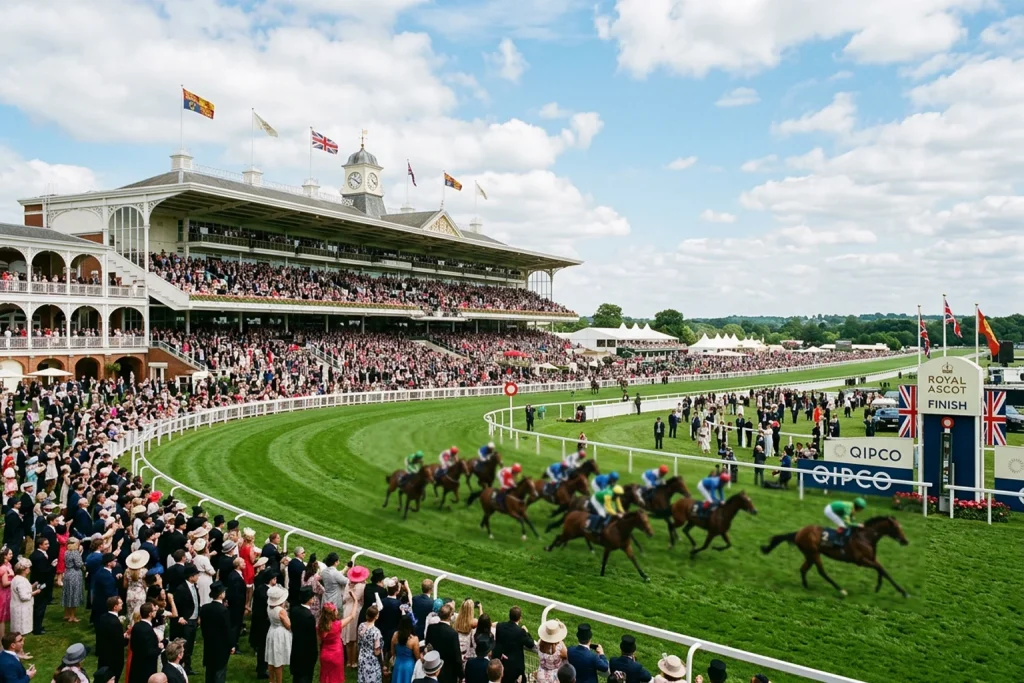
Royal Ascot attracts the largest fields of the Flat season, and large fields create each-way opportunities that barely exist elsewhere. When twenty or more horses line up for a handicap, bookmakers extend place terms to five, six, or even eight positions. Those enhanced terms shift the mathematics of betting in ways that favour punters who understand the numbers.
The meeting drew 286,541 spectators across five days in 2026, a 4.8 per cent increase on the previous year. That attendance drives betting turnover, which in turn forces bookmakers to offer competitive each-way terms. The Wokingham Stakes, Royal Hunt Cup, and Britannia Stakes regularly attract fields exceeding twenty runners, making each-way betting more than a consolation strategy. For many punters, it becomes the primary approach.
How Each-Way Works at Royal Ascot
An each-way bet is two bets in one: a win bet and a place bet. If your horse wins, both parts pay out. If it finishes in the places but does not win, only the place portion returns. The place odds are calculated as a fraction of the win odds, typically one quarter or one fifth depending on the race conditions.
Standard terms in British racing pay one quarter of the win odds for three places in fields of eight to fifteen runners. Royal Ascot’s big handicaps exceed those thresholds, triggering enhanced terms. A race with sixteen or more runners typically pays four places at one quarter odds. When fields reach twenty or more, bookmakers may offer five, six, or seven places, sometimes at reduced fractions like one fifth instead of one quarter.
The place fraction matters as much as the number of places. A horse at 20/1 paying one quarter odds returns 5/1 for a place. The same horse at one fifth odds returns only 4/1. Across multiple bets, that difference compounds. Punters who compare terms between bookmakers before placing each-way wagers gain a structural edge over those who accept whatever appears on screen.
At Royal Ascot, where prize money reached a record £10.65 million in 2026, trainers send their best handicappers for a crack at prestigious targets. The quality of competition means even well-fancied horses can finish fourth or fifth. Each-way betting captures those near-misses while still paying handsomely when a selection wins.
Enhanced Place Terms: 5, 6, 7 or Even 8 Places
Bookmakers compete fiercely during Royal Ascot week, and enhanced place terms are their primary weapon. In the hours before a cavalry-charge handicap, you might find one firm offering six places at one quarter odds while another stretches to seven places at one fifth. Neither is objectively better until you run the numbers for your specific selection.
The Royal Hunt Cup traditionally attracts the largest field of the meeting. In years when thirty runners go to post, some bookmakers pay eight places. At that point, more than a quarter of the field triggers a place payout, dramatically improving the probability of a return. The Wokingham Stakes on Saturday and the Britannia Stakes on Thursday offer similar opportunities, regularly fielding twenty-five or more runners.
Enhanced terms carry conditions. Most expire once the final declarations are confirmed, so betting ante-post at enhanced terms requires confidence that the horse will run and the field will remain large. Non-runner no-bet rules apply to some offers but not all. Reading the terms before clicking matters.
The practical effect of enhanced places is to lower the break-even win rate for each-way betting. A horse that places in six of twenty starts might generate profit under seven-place terms while losing money under standard four-place conditions. The maths deserves attention, and Royal Ascot provides more chances to exploit it than any other meeting.
Which Races Suit Each-Way Betting?
Handicaps with large fields are the natural home for each-way betting at Royal Ascot. The Royal Hunt Cup, Wokingham Stakes, and Britannia Stakes consistently attract runners in the twenties, offering enhanced place terms that make backing outsiders viable. Smaller races like the Queen Anne Stakes or Gold Cup, typically featuring eight to twelve runners, offer only standard three-place terms and favour win-only strategies.
Field size alone does not guarantee each-way value. A twenty-runner handicap with four short-priced horses can still produce a predictable result. The ideal each-way race combines a large field with a compressed market, where the favourite trades around 6/1 or longer and a dozen horses occupy a narrow band of odds. The Wokingham often fits this profile: maximum field, little between the contenders, and chaos a genuine possibility.
Two-year-old races at Royal Ascot, including the Coventry Stakes and the Norfolk Stakes, rarely offer enhanced terms because fields tend to be smaller. Juvenile form is unreliable anyway, making win-only punts on fancied runners the cleaner approach. Each-way bets on unexposed two-year-olds can feel like throwing darts blindfolded.
Staying handicaps over two miles or further attract smaller fields but often produce surprises. The Ascot Stakes, run over two and a half miles on Thursday, draws specialists that fade in and out of form. Each-way value emerges when an out-of-form stayer returns to peak condition at generous odds. Watching the market for late support can identify these revival candidates.
The Maths: When E/W Beats Win-Only
Each-way betting makes sense when the implied probability of placing exceeds the place odds offered. A horse at 20/1 paying one quarter odds for a place returns 5/1 on the place part. To break even on the place portion alone, that horse needs to finish in the places roughly one in six times. In a twenty-runner race paying six places, the raw probability of placing is six in twenty, or 30 per cent. The break-even rate is about 16.7 per cent. The difference represents your edge.
This calculation assumes random finishing positions, which obviously does not apply. A 20/1 shot is 20/1 because the market believes it has less chance than its rivals. But if you believe the market has underestimated a horse by two or three positions, each-way terms can convert a marginal win prospect into a profitable place bet.
Consider a concrete example. You fancy a horse at 16/1 in a twenty-two-runner handicap where seven places are paid at one fifth odds. The place odds are 16/5 (3.2/1). A £10 each-way bet costs £20. If the horse wins, you receive £170 for the win plus £42 for the place, totalling £212 including stakes. If it places but does not win, you receive £42. To profit overall, you need the horse to place often enough that the occasional win, combined with more frequent places, exceeds your total outlay. In this scenario, placing in roughly one of every five attempts generates a profit.
Royal Ascot’s handicaps produce enough surprise results that backing horses between 12/1 and 25/1 each-way on enhanced terms has historically outperformed backing favourites win-only. The caveat is obvious: you need to select horses capable of running into the places, not hopeless outsiders whose long odds accurately reflect their ability.
The Two-Bet Strategy in One Race
Some punters split their stake across two each-way selections in the same race rather than backing a single horse for double the amount. The logic is straightforward: in a chaotic handicap where half a dozen horses might win, spreading risk across two fancied runners increases the chance of a return while capping downside to the combined stake.
This approach works best when your two selections are uncorrelated. Backing two hold-up horses drawn high offers little diversification because both need the same scenario to unfold. Backing one front-runner drawn low and one closer drawn in midfield covers two distinct paths to success. If the pace collapses, one might win. If it turns into a sprint, the other might run into a place.
The mathematics become complicated. If both horses place but neither wins, you collect two place payouts. If one wins and one places, the combined return can exceed a single larger each-way bet on the winner, depending on odds and terms. If both lose, you sacrifice twice the stake you would have risked on one selection. Working through the scenarios before placing helps avoid nasty surprises.
This strategy suits Royal Ascot’s big handicaps where identifying a single selection feels like guesswork. The Wokingham Stakes, with its field of thirty sprinters and compressed market, offers limited confidence in any individual runner. Two each-way bets at 14/1 and 20/1 on horses with different running styles captures value across outcomes without requiring you to nail the winner. When betting on the unpredictable, it pays to accept unpredictability rather than fight it.